 FREE & FAST SHIPPING for orders over
  USA (Americas):
  UK (Europe):
  AUSTRALIA (Asia)


Foreskin Hygiene: How to Clean Your Foreskin Properly and Keep It Healthy
Good foreskin hygiene is an important part of men's health.
For uncircumcised men, regular cleaning beneath the foreskin helps remove natural skin oils, dead skin cells and smegma while reducing the risk of irritation, unpleasant odour and some infections.
A simple daily routine can help keep the foreskin comfortable, healthy and functioning normally.
This guide explains how to clean your foreskin safely, common hygiene mistakes to avoid and how products such as a gentle cleansing soap, moisturising cream and conditioning oil may support your daily routine.
Why Foreskin Hygiene Matters
Maintaining good foreskin hygiene is an important part of overall penile health. For uncircumcised men, the space beneath the foreskin creates a warm, moist environment where natural skin oils, dead skin cells and bacteria can accumulate. Regular, gentle cleaning helps maintain a healthy balance while reducing the risk of irritation and discomfort.
Good hygiene is not about excessive washing; it is about developing a simple, consistent routine that supports healthy skin and foreskin function.
Removes Smegma
Smegma is a naturally occurring substance made up of shed skin cells, skin oils and moisture. While it is normal, it can accumulate beneath the foreskin if the area is not cleaned regularly.
Regular foreskin cleaning helps remove excess smegma before it builds up, making hygiene easier and reducing the risk of unpleasant odour and irritation.
Helps Reduce Unpleasant Odour
An unpleasant smell can develop when sweat, oils, urine residue and smegma remain trapped beneath the foreskin. Daily cleansing with warm water and, if desired, a gentle cleanser formulated for sensitive intimate skin helps keep the area fresh without disrupting the skin's natural protective barrier.
Supports Healthy Skin
The foreskin is delicate tissue that benefits from gentle daily care. Maintaining good hygiene helps keep the skin clean and comfortable while reducing the accumulation of substances that may contribute to irritation. If the skin becomes dry, a suitable moisturising cream or conditioning oil may help maintain skin comfort and suppleness as part of an overall foreskin care routine.
Improves Everyday Comfort
Good foreskin hygiene can improve comfort during everyday activities, including walking, exercise and intimacy. Removing excess moisture, sweat and debris helps reduce friction and keeps the foreskin feeling clean and healthy throughout the day.
May Help Reduce Irritation
Poor hygiene can contribute to local irritation and may increase the risk of conditions such as balanitis in some individuals. While not every case of irritation is caused by hygiene, regular cleansing and appropriate skin care can help maintain a healthy skin environment. If redness, pain, swelling or persistent irritation develops, seek medical advice to determine the underlying cause.
Supports Sexual Wellbeing
A healthy foreskin contributes to overall comfort and confidence. Maintaining good hygiene may help improve comfort during intimate activity by reducing irritation, unpleasant odour and the accumulation of smegma. Good foreskin care is an important part of men's intimate health and supports both physical comfort and confidence in daily life.
Key Takeaway
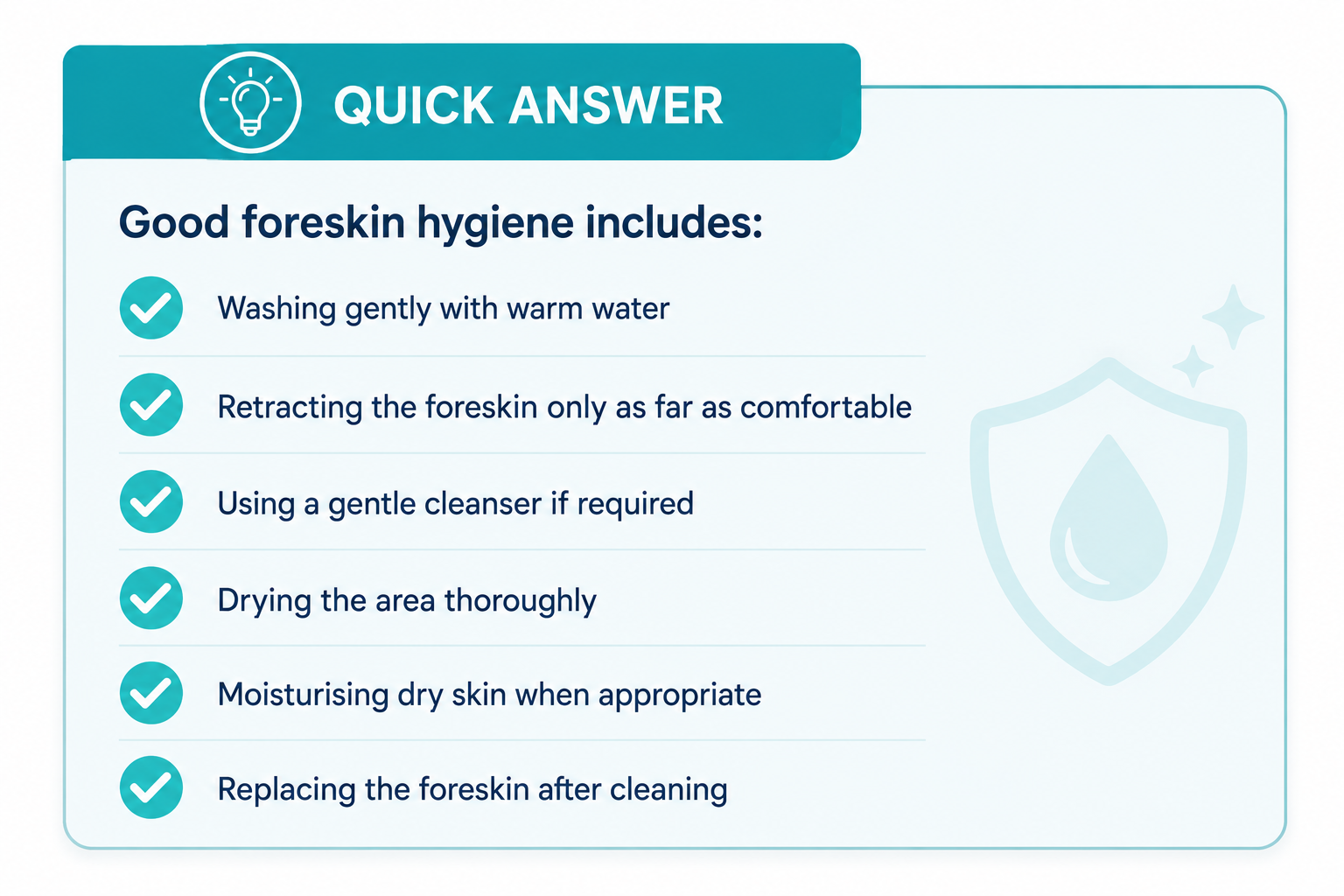
Healthy foreskin hygiene is built on a few simple habits:
- Gently wash beneath the foreskin with warm water each day.
- Use a mild, non-irritating cleanser if needed.
- Dry the area thoroughly before replacing the foreskin.
- Moisturise dry skin when appropriate.
- Seek medical advice if you notice persistent redness, swelling, pain, discharge or difficulty retracting the foreskin.
Developing a consistent daily routine can help maintain healthy foreskin tissue and support long-term penile health.
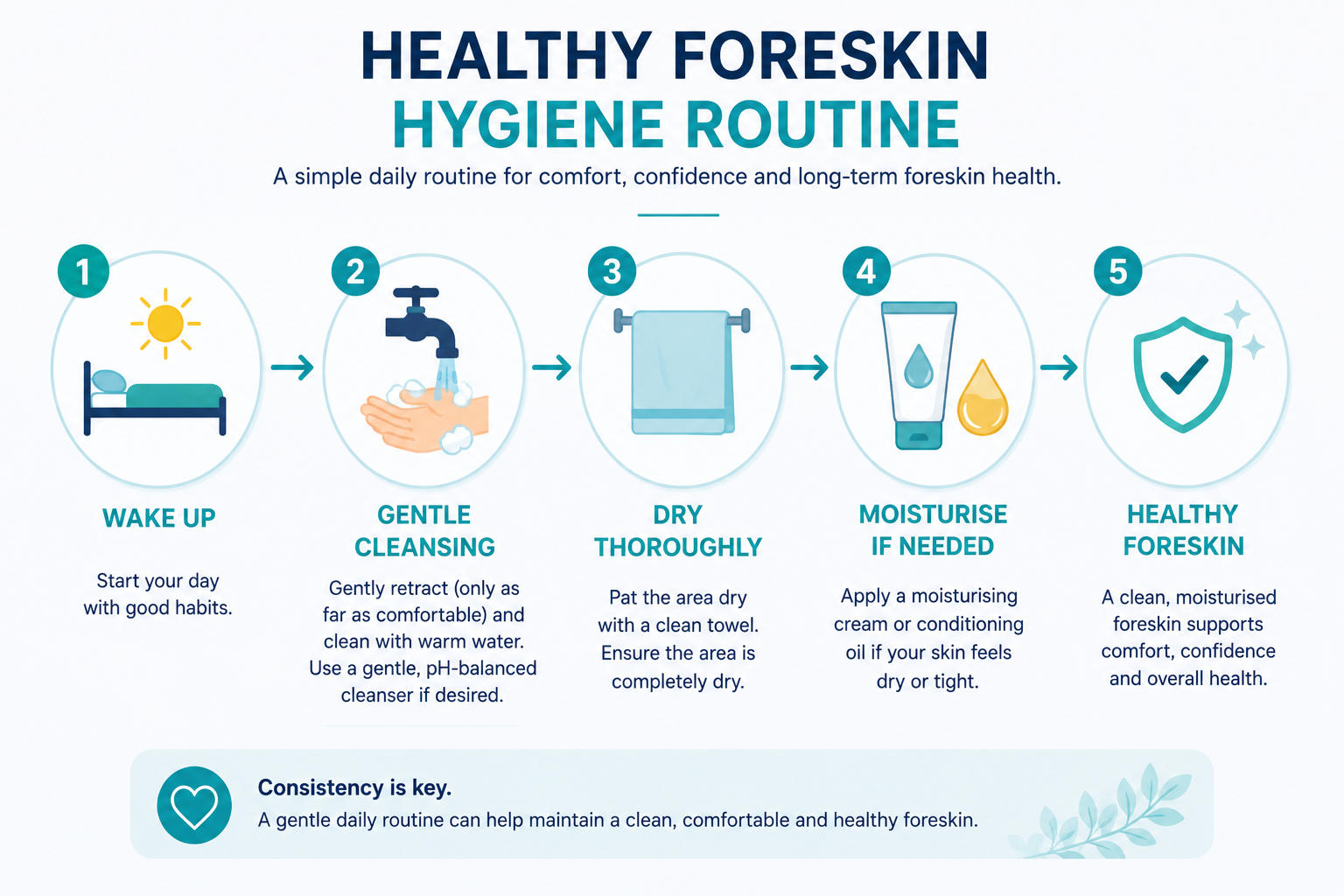
Maintaining good foreskin hygiene is simple and only takes a few minutes each day. A gentle daily routine can help remove natural build-up, support healthy skin, reduce unpleasant odour and keep the foreskin comfortable.
It is important to clean the foreskin gently. Excessive scrubbing, harsh soaps or forcefully retracting the foreskin may cause irritation rather than improve hygiene.
Follow these simple steps as part of your daily personal care routine.
Step 1 – Wash Your Hands
Before touching the genital area, wash your hands thoroughly with soap and warm water.
Clean hands help reduce the transfer of bacteria and other microorganisms, supporting healthy intimate hygiene.
Step 2 – Gently Retract the Foreskin
If your foreskin retracts comfortably, gently pull it back just enough to expose the glans (head of the penis).
Never force the foreskin back.
If you experience pain, tightness or difficulty retracting your foreskin, stop and speak with your healthcare professional, as this may indicate phimosis or another underlying condition.
Step 3 – Wash with Warm Water
Rinse the glans and the inside of the foreskin using warm water to remove sweat, natural skin oils and smegma.
Warm water alone is sufficient for many men as part of their daily routine.
Step 4 – Use a Gentle Cleanser (If Desired)
Some men prefer using a gentle cleanser designed for sensitive intimate skin, particularly if they experience excess sweating, unpleasant odour or recurrent build-up beneath the foreskin.
Choose a cleanser that is:
- Gentle on sensitive skin
- Suitable for daily use
- Free from harsh detergents where possible
- Easy to rinse away
Daily Care Tip
For men looking to enhance their daily hygiene routine, the Novoglan Gentle Cleansing Soap 50 mL has been developed specifically for intimate skin care. Its gentle cleansing formulation helps remove daily build-up while supporting healthy foreskin hygiene without the harshness often associated with conventional soaps.
→ Explore the Novoglan Gentle Cleansing Soap
Step 5 – Rinse Thoroughly
After cleansing, rinse the area thoroughly with clean, warm water.
Removing any remaining cleanser helps minimise the chance of residue irritating the sensitive foreskin tissue.
Step 6 – Dry the Area Completely
Using a clean, soft towel, gently pat the foreskin and glans dry.
Avoid rubbing the skin vigorously, as this can cause unnecessary irritation.
Drying the area thoroughly helps minimise excess moisture, which may contribute to irritation or create an environment where microorganisms thrive.
Step 7 – Moisturise Dry Skin (When Needed)
If the foreskin feels dry, tight or irritated after washing, applying a gentle moisturising product may help support skin comfort and maintain the skin's natural barrier.
Regular moisturising can be particularly helpful in dry climates, after frequent washing or for men who simply want to maintain healthy foreskin skin.
Daily Care Tip
The Novoglan Enriched Foreskin Conditioning Cream 30 mL is formulated to nourish and condition delicate foreskin skin. Used as part of a daily care routine, it helps support skin comfort and maintain softness without relying on corticosteroids.
→ Learn More About Novoglan Foreskin Conditioning Cream
Step 8 – Conditioning for Long-Term Skin Health (Optional)
Some men choose to incorporate a conditioning oil into their regular intimate care routine to help maintain skin suppleness and hydration.
A conditioning oil may be particularly beneficial for men with naturally dry skin or those wishing to support overall foreskin health as part of their daily regimen.
Daily Care Tip
Novoglan Prepucil™ Revitalizing Oil 100 mL has been developed to help moisturise, revitalise and condition foreskin skin. Applied after cleansing, it supports a healthy skin environment and complements an ongoing foreskin care routine.
→ Discover Novoglan Prepucil™ Revitalizing Oil
Step 9 – Return the Foreskin to Its Natural Position
After cleaning and drying, gently return the foreskin to its normal position covering the glans.
Leaving the foreskin retracted can increase the risk of paraphimosis, a condition where the foreskin becomes trapped behind the glans and requires urgent medical attention.
Always ensure the foreskin has been comfortably returned to its normal position before dressing.
Build a Simple Daily Foreskin Care Routine
Consistency is more important than complexity. A few minutes each day can help support healthy foreskin skin, comfort and confidence.
A simple routine might look like this:
Morning
✓ Wash with warm water
✓ Cleanse with Novoglan Gentle Cleansing Soap (if desired)
✓ Dry thoroughly
✓ Apply Novoglan Enriched Foreskin Conditioning Cream if the skin feels dry
Evening
✓ Repeat gentle cleansing if needed
✓ Apply Novoglan Prepucil™ Revitalizing Oil to nourish and condition the skin overnight
Common Hygiene Mistakes
|
Mistake |
Why Avoid It |
|
Harsh soaps |
Can dry and irritate skin |
|
Overwashing |
May disrupt the skin barrier |
|
Forceful retraction |
Can cause injury |
|
Leaving moisture |
Encourages irritation |
|
Ignoring odour |
May indicate infection |
What Is Smegma?
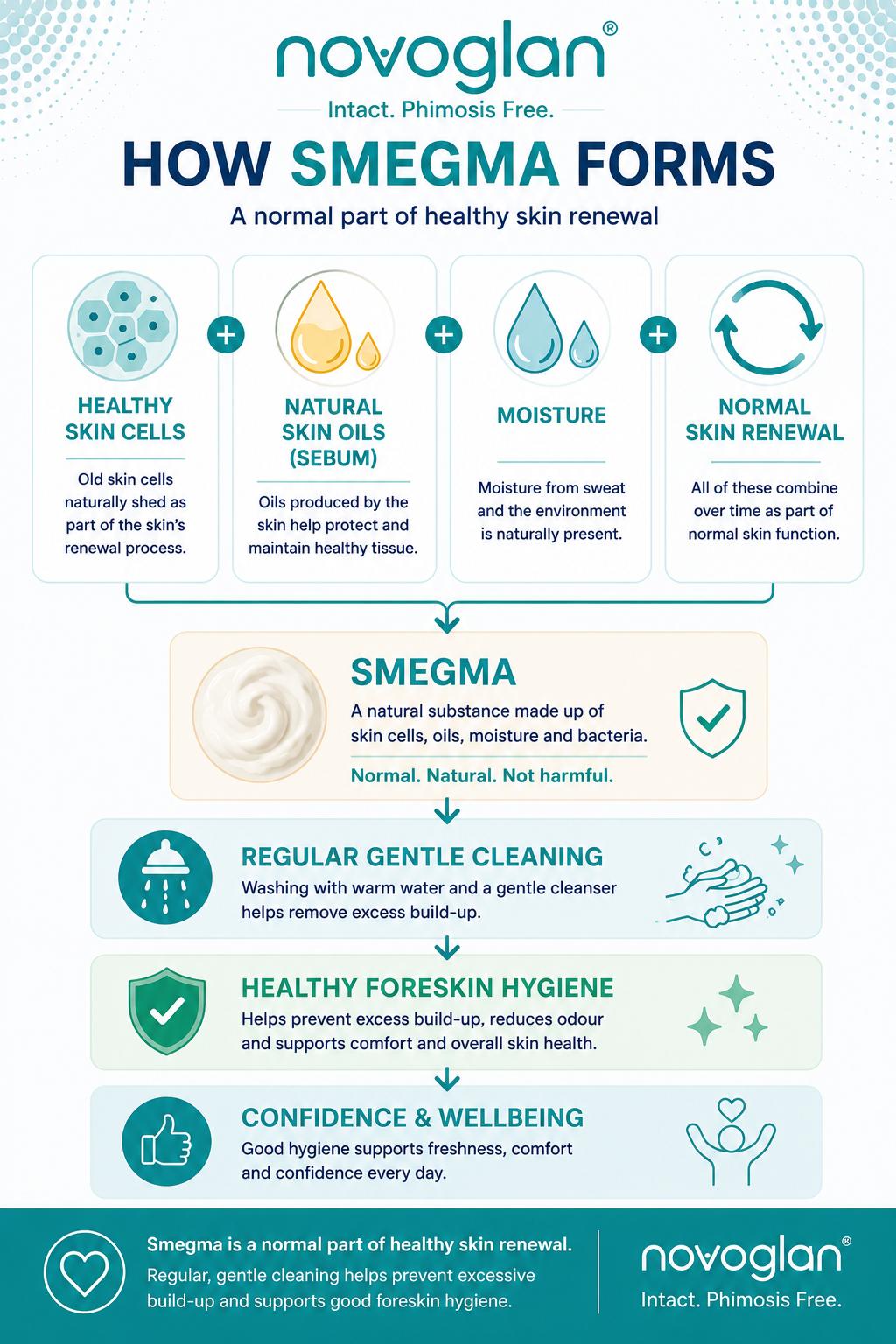
Smegma is a normal, naturally occurring substance that forms beneath the foreskin in uncircumcised men. It is made up of a combination of shed skin cells, natural skin oils (sebum), moisture and small amounts of normal skin bacteria.
Although the name may sound concerning, smegma itself is not a disease or an infection. It is simply part of the body's normal process of renewing and protecting the skin.
When good foreskin hygiene is maintained, smegma is easily removed during regular washing and rarely causes any problems.
Is Smegma Normal?
Yes. Smegma is a completely normal part of male anatomy.
Just as skin cells naturally shed elsewhere on the body, the skin beneath the foreskin continuously renews itself. Combined with natural oils produced by the skin and normal moisture, this process creates smegma.
The amount of smegma varies from person to person and may depend on factors such as the following:
- Personal hygiene habits
- Sweat production
- Skin oil production
- Age
- Sexual activity
- Individual anatomy
Some men notice very little smegma, while others may experience a greater build-up if the area is not cleaned regularly.
What Does Smegma Look Like?
Smegma is usually:
- White or off-white in colour
- Creamy or slightly waxy in texture
- Soft rather than hard
- Found beneath the foreskin around the glans
A small amount is considered normal.
However, if it is accompanied by redness, swelling, pain, discharge or a strong unpleasant odour, it may indicate an underlying condition such as balanitis or another infection that should be assessed by a healthcare professional.
Why Does Smegma Build Up?
Smegma gradually accumulates when natural skin oils, moisture and dead skin cells are not removed through regular cleaning.
Without a consistent hygiene routine, this build-up can:
- Cause an unpleasant odour
- Increase local irritation
- Make foreskin hygiene more difficult
- Contribute to inflammation in some men
Fortunately, regular gentle cleaning is usually all that is required to prevent excessive accumulation.
How Do You Remove Smegma Safely?
Removing smegma is simple and should never require aggressive scrubbing.
A daily hygiene routine usually involves:
- Washing your hands.
- Gently retracting the foreskin (only if it retracts comfortably).
- Rinsing beneath the foreskin with warm water.
- Using a gentle cleanser if desired.
- Rinsing thoroughly.
- Drying the area completely.
- Returning the foreskin to its normal position.
Regular cleansing helps prevent build-up while supporting healthy foreskin skin.
Daily Hygiene Tip: A gentle cleanser formulated for intimate skin, such as the Novoglan Gentle Cleansing Soap, can be incorporated into your daily routine to help remove excess oils and build-up while remaining suitable for sensitive skin.
→ Explore Novoglan Gentle Cleansing Soap
Can Smegma Be Prevented?
Because smegma is a natural by-product of healthy skin renewal, it cannot be completely prevented, and it doesn't need to be.
Instead, the goal is to prevent excessive build-up by maintaining consistent foreskin hygiene.
Simple habits like daily washing, thorough drying, and using appropriate skin care products help maintain a clean and comfortable environment beneath the foreskin.
Should You See a Doctor for Smegma?
Smegma itself is usually harmless, but medical advice should be sought if you experience the following:
- Persistent redness or swelling
- Pain or tenderness
- Thick yellow or green discharge
- Bleeding
- Difficulty retracting the foreskin
- Persistent unpleasant odour despite good hygiene
- White scarring or tightening of the foreskin
These symptoms may indicate balanitis, phimosis, lichen sclerosus (BXO) or another condition requiring medical assessment.
When Should You Use a Foreskin Cleanser?
Not every man needs a dedicated foreskin cleanser. For many, warm water alone is sufficient for routine hygiene.
However, some men prefer to incorporate a gentle cleansing product into their daily personal care routine to help remove sweat, natural skin oils and excess build-up while maintaining optimal foreskin hygiene.
When choosing an intimate cleanser, look for a product that is
- Suitable for regular personal hygiene
- Gentle enough for use on sensitive intimate skin
- Easy to rinse away
- Used according to the manufacturer's directions
No matter which cleansing routine you choose, avoid harsh scrubbing or forcing the foreskin back, as such actions may cause irritation or injury.
Daily Hygiene Tip
The Novoglan Gentle Cleansing Soap 50 mL has been developed as part of the Novoglan Men's Care range to support everyday foreskin hygiene. It can be used as part of a regular cleansing routine to help remove daily build-up while promoting clean, comfortable skin.
→ Discover Novoglan Gentle Cleansing Soap
Optional Educational Note
It's important to remember that no cleanser can prevent or treat medical conditions such as phimosis, balanitis or infections. If you experience persistent redness, pain, swelling, discharge or difficulty retracting the foreskin, seek assessment from a healthcare professional.
Should You Moisturise the Foreskin?
Like the skin elsewhere on the body, the foreskin can occasionally become dry or feel less comfortable due to everyday factors such as:
- Dry or cold climates
- Frequent washing
- Friction from clothing or physical activity
- General skin dryness
Keeping the foreskin skin well cared for may help support comfort as part of a regular personal care routine.
Some men choose to use a moisturising product after cleansing to help maintain skin hydration and overall skin condition.
When selecting a product for intimate skin, choose one that is intended for external use and follow the manufacturer's directions.
Important: Persistent dryness, cracking, pain or changes in the appearance of the foreskin should be assessed by a healthcare professional, as these symptoms may indicate an underlying skin condition rather than simple dryness.
Daily Care Tip
The Novoglan Enriched Foreskin Conditioning Cream 30 mL has been developed as part of the Novoglan Men's Care range to help condition and care for foreskin skin as part of an everyday hygiene routine.
→ Learn more about Novoglan Enriched Foreskin Conditioning Cream
What About Foreskin Conditioning Oil?
Some men also choose to incorporate a conditioning oil into their regular foreskin care routine, particularly after cleansing or when the skin feels dry.
A conditioning oil can be used as part of a personal care routine to help:
- Condition the skin
- Maintain skin softness and suppleness
- Support skin comfort
- Complement an overall foreskin care routine
While conditioning products may help maintain healthy-looking skin, they are not intended to diagnose, treat or prevent medical conditions. If you have ongoing discomfort, inflammation or difficulty retracting the foreskin, seek advice from a healthcare professional.
Daily Care Tip
Novoglan Prepucil™ Revitalizing Oil 100 mL has been formulated to help nourish and condition foreskin skin as part of a regular men's intimate care routine.
→ Explore Novoglan Prepucil™ Revitalizing Oil
Building a Daily Foreskin Care Routine
Looking after your foreskin doesn't need to be complicated. Many men find that a simple, consistent routine supports healthy skin and effective intimate hygiene.
A typical routine may include:
| Morning | Evening |
|---|---|
| Gently cleanse the foreskin | Cleanse if needed after exercise or daily activities |
| Dry the area thoroughly | Apply conditioning cream or oil if desired |
| Return the foreskin to its natural position | Maintain regular hygiene and monitor for any changes |
Whether you choose to use warm water alone or incorporate additional skin care products, consistency and gentle care are key to maintaining healthy foreskin hygiene.
Frequently Asked Questions About Foreskin Hygiene
How often should I clean my foreskin?
For most uncircumcised men, gently cleaning beneath the foreskin once a day as part of your normal shower or bathing routine is sufficient.
If you exercise regularly, sweat heavily or spend time in hot, humid environments, you may choose to cleanse the area more frequently. The goal is to keep the area clean without overwashing, which may contribute to skin dryness or irritation.
Always wash gently, dry the area thoroughly and return the foreskin to its normal position after cleaning.
Can I Use Normal Soap?
Many men find that warm water alone is sufficient for routine foreskin hygiene.
If you prefer to use a cleanser, choose one that is suitable for personal hygiene and gentle enough for sensitive intimate skin. Harsh soaps, heavily fragranced products or vigorous scrubbing may irritate the delicate skin of the foreskin in some individuals.
Daily Care Tip: The Novoglan Gentle Cleansing Soap has been developed as part of the Novoglan Men's Care range to support everyday foreskin hygiene.
→ Learn More About Novoglan Gentle Cleansing Soap
Should I Moisturise My Foreskin?
Like the skin elsewhere on the body, the foreskin may occasionally become dry due to factors such as climate, frequent washing or everyday friction.
Some men choose to use a conditioning cream or oil after cleansing as part of their personal care routine to help maintain skin comfort.
If dryness is persistent, painful or associated with cracking or white patches, consult a healthcare professional to rule out an underlying skin condition.
Can Poor Hygiene Cause Balanitis?
Poor hygiene is one of several factors that may contribute to balanitis, particularly when smegma, moisture and microorganisms accumulate beneath the foreskin.
However, balanitis can also result from fungal or bacterial infections, skin conditions such as eczema or psoriasis, allergies and other medical conditions.
Maintaining good foreskin hygiene may help reduce the risk of irritation, but a healthcare professional should always assess persistent symptoms.
Can Good Hygiene Help Reduce Irritation?
Good foreskin hygiene supports overall skin health and may help reduce irritation associated with sweat, excess moisture, smegma and everyday skin build-up.
However, not all irritation is caused by hygiene alone. Persistent redness, swelling, pain, discharge, bleeding or difficulty retracting the foreskin may indicate an underlying condition that requires medical assessment.
If symptoms continue despite maintaining good hygiene, consult your healthcare professional.
Is It Normal to Have a Tight Foreskin?
In adults, a foreskin that cannot be comfortably retracted may be a sign of phimosis.
A healthcare professional can determine whether treatment is necessary. Depending on the underlying cause, management may include conservative approaches, prescription medications or, in selected cases, surgery.
→ Read our complete guide to phimosis
What Should I Do If My Foreskin Gets Stuck Behind the Glans?
If your foreskin becomes trapped behind the head of the penis and cannot be returned to its normal position, the condition may be paraphimosis, which is a medical emergency.
Seek urgent medical attention immediately, particularly if you experience pain, swelling or changes in skin colour.
Do not continue trying to force the foreskin back if it is causing significant pain or swelling.
→ Learn the difference between phimosis and paraphimosis.
Can I Use Foreskin Care Products Every Day?
Many men choose to incorporate cleansing and conditioning products into their regular personal hygiene routine.
Always use products according to the manufacturer's directions and discontinue use if irritation occurs. If you are unsure which products are appropriate for your individual needs, speak with your healthcare professional.