 FREE & FAST SHIPPING for orders over
  USA (Americas):
  UK (Europe):
  AUSTRALIA (Asia)


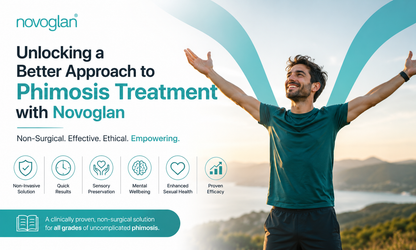
Unlocking a Better Approach to Phimosis Treatment with Novoglan
Posted by Kinza Khan, PharmD
28th Jul 2026
Unlocking a Better Approach to Phimosis Treatment with Novoglan
Hearing you have phimosis can be worrying, especially if you fear surgery or circumcision is your only option. The encouraging news is that many men with mild to moderate phimosis can be treated successfully without surgery, depending on the underlying cause and the severity of the condition.
Today, conservative treatment approaches focus on preserving the foreskin whenever appropriate. Options such as gentle foreskin stretching, prescription topical corticosteroid creams, and purpose-designed balloon-assisted stretching devices may help improve foreskin flexibility and restore comfortable foreskin retraction without the need for immediate surgical intervention. However, not every case of phimosis is the same, and the most appropriate treatment depends on factors such as inflammation, scarring, recurrent infections, and your individual medical history.
In this guide, we'll explain the non-surgical treatment options available for phimosis, who may be suitable for conservative treatment, when surgery may still be necessary, and what current clinical practice recommends. Whether you're exploring alternatives to circumcision or simply want to better understand your options, this article will help you make a more informed decision in partnership with your healthcare professional.
Quick Answers
What is the best non-surgical treatment for phimosis?
There is no single treatment that is right for everyone. Conservative treatment commonly involves gentle foreskin stretching, which may be combined with a prescription topical corticosteroid cream to improve skin elasticity and reduce inflammation where appropriate. Some men also choose balloon-assisted stretching devices, which provide controlled, even pressure during a stretching programme. Your healthcare professional can recommend the approach most suitable for your individual circumstances.
How long does non-surgical treatment take?
Treatment times vary depending on the individual and the severity of the phimosis and the treatment method used. Some men notice gradual improvement within a few weeks, while others may require a longer period of consistent conservative treatment. It's important to follow your healthcare professional's advice and avoid forcing the foreskin, as aggressive stretching may lead to injury or scarring.
When is surgery recommended?
Surgery may be recommended if conservative treatment does not work or if phimosis is caused by significant scarring, recurrent infections, or an underlying inflammatory skin condition such as lichen sclerosus (BXO). Your healthcare professional will discuss the benefits and risks of both surgical and non-surgical treatment options before recommending the most appropriate approach.
Can phimosis be treated without surgery?
Yes. Many men with mild to moderate phimosis can be successfully treated without surgery. Conservative treatment may include gentle foreskin stretching, prescription topical corticosteroid creams, balloon-assisted stretching, and supportive foreskin care. The most appropriate treatment depends on the cause and severity of the condition, so it's important to seek advice from a healthcare professional.
Can I avoid circumcision if I have phimosis?
In many cases, yes. Circumcision is not always the first treatment option for uncomplicated phimosis. Many healthcare professionals recommend trying conservative, foreskin-preserving treatments before considering surgery, provided there is no significant scarring, recurrent complications, or an underlying condition such as lichen sclerosus (BXO).
Is non-surgical treatment suitable for everyone?
No. Conservative treatment is generally most suitable for men with mild to moderate, uncomplicated phimosis. If significant scarring, recurrent infections, severe symptoms, or an underlying skin condition is present, surgery or another medical procedure may be more appropriate. Your healthcare professional can recommend the treatment best suited to your individual circumstances.
What happens if conservative treatment doesn't work?
If your symptoms do not improve despite following an appropriate conservative treatment programme, your healthcare professional may recommend reviewing your diagnosis or discussing surgical options. This does not necessarily mean circumcision is the only solution, as other foreskin-preserving procedures may be appropriate for some men.
Is balloon-assisted stretching a non-surgical treatment?
Yes. Balloon-assisted stretching is a conservative treatment that uses a purpose-designed device to apply gentle, even pressure to the tight foreskin. It is designed to support gradual stretching while preserving the foreskin and may be suitable for some men with uncomplicated phimosis. As with all treatments, it should be used according to the manufacturer's Instructions for Use and any advice from your healthcare professional.
Can Phimosis Be Treated Without Surgery?
Yes, many cases of phimosis can be treated without surgery. Conservative treatment is often considered the first approach for men with mild to moderate phimosis, particularly when there is no significant scarring or underlying skin disease.
The aim of non-surgical treatment is to gradually improve the flexibility of the foreskin while preserving it. Depending on your individual circumstances, this may involve gentle foreskin stretching, prescription topical corticosteroid creams, or balloon-assisted stretching devices used under the guidance of a healthcare professional.
Conservative treatment is generally most successful when started early, before repeated inflammation or scarring has significantly reduced the elasticity of the foreskin. Many men experience gradual improvement over time with consistent treatment, although results vary depending on the cause and severity of the condition.
It's important to remember that not every case of phimosis is the same. While conservative treatment can be effective for many men, surgery may still be recommended if significant scarring is present, recurrent infections continue despite treatment, or an underlying condition such as lichen sclerosus (BXO) is identified.
The best treatment is the one that suits your individual circumstances, so an assessment by a healthcare professional is recommended if you're unsure about the cause of your symptoms.
Who Is Suitable for Conservative Treatment?
Conservative treatment may be appropriate for many men with uncomplicated phimosis, particularly when the foreskin is tight but otherwise healthy. Your healthcare professional will consider several factors before recommending the most suitable treatment approach.
You may be a good candidate for non-surgical treatment if you:
- Have mild to moderate phimosis without significant scarring.
- Can partially retract your foreskin or have only a tight phimotic ring.
- Experience discomfort during retraction or sexual activity but have no severe complications.
- Wish to preserve your foreskin and avoid surgery where appropriate.
- Are willing to follow a consistent treatment programme, including gentle stretching where recommended.
Conservative treatment may be less suitable if you have:
- Significant scarring or a thickened white ring around the foreskin.
- Suspected or confirmed lichen sclerosus (BXO).
- Recurrent infections that have not responded to appropriate treatment.
- Severe phimosis causing urinary obstruction or other complications.
- Paraphimosis, which is a medical emergency requiring immediate treatment.
Even if conservative treatment is appropriate, regular follow-up with your healthcare professional is important to monitor progress and determine whether your treatment plan should be adjusted. Early intervention often provides the greatest opportunity to improve foreskin flexibility while preserving the foreskin.
Looking for the Novoglan Treatment System?
Learn more about our patented balloon stretching kits and conditioning creams designed for phimosis relief.
Is Conservative Treatment Right for You?
The most appropriate treatment for phimosis depends on the underlying cause, the severity of the condition, and your individual circumstances. While many men with uncomplicated phimosis can be managed without surgery, others may require further medical assessment or surgical treatment.
The table below provides a general guide to when conservative treatment may be appropriate and when a healthcare professional may recommend a different approach.
Is Conservative Treatment Right for You?
The most appropriate treatment for phimosis depends on the underlying cause, the severity of the condition, and your individual circumstances. The table below provides a general guide to when conservative treatment may be appropriate and when a healthcare professional may recommend a different approach.
| Conservative Treatment May Be Suitable If... | Further medical assessment or surgery may be recommended if: |
|---|---|
| You have mild to moderate phimosis without significant scarring. | You have severe phimosis with significant scarring or a thick white phimotic ring. |
| Your foreskin is tight but can be partially retracted. | Your foreskin cannot be retracted at all due to extensive scarring. |
| You have little or no history of recurrent infections. | You experience frequent episodes of balanitis or recurrent infections despite treatment. |
| You wish to preserve your foreskin where appropriate. | You have suspected or confirmed lichen sclerosus (BXO). |
| You are willing to follow a consistent stretching programme, and your healthcare professional has recommended conservative treatment. | Conservative treatment has not improved your symptoms, or the condition continues to worsen. |
| Urination is normal, and you have no serious complications. | You have difficulty passing urine, severe ballooning during urination, or develop paraphimosis, which requires urgent medical attention. |
Every case of phimosis is different. This table is intended as a general guide only and should not replace an assessment by a qualified healthcare professional. If you are unsure which treatment option is right for you, please seek medical advice before starting any treatment programme.
Non-Surgical Treatment Options
There is no single non-surgical treatment that's right for everyone. The most appropriate approach depends on the severity of the phimosis, the presence of inflammation or scarring, and your individual circumstances. Often, healthcare professionals recommend a combination of treatments that work together to improve foreskin flexibility while preserving the foreskin.
Below are some of the most commonly used conservative treatment options.
Ready to Explore a Non-Surgical Phimosis Solution?
The Novoglan Gentle Foreskin Stretcher Kit provides controlled, comfortable tension designed to help restore foreskin mobility safely at home—without surgery.
✓ Discrete Shipping worldwide | ✓ Urologist trusted | ✓ TGA/FDA Listed
Gentle Foreskin Stretching
Gentle foreskin stretching is one of the most widely recommended conservative treatments for mild to moderate phimosis. Rather than forcing the foreskin back, stretching involves applying light, controlled tension over time, allowing the skin to gradually become more flexible through the body's natural tissue expansion process.
Consistency is key. Stretching should never be painful or cause bleeding, as excessive force may increase the risk of scarring and make the tightness worse. Many healthcare professionals recommend stretching as a first-line treatment for suitable patients before considering surgery.
Related reading: Foreskin Stretching: How to retract a tight foreskin safely without surgery?
Balloon-Assisted Stretching
Some men prefer a more structured alternative to manual stretching. Balloon-assisted stretching uses a purpose-designed medical device to apply gentle, even pressure around the tight foreskin, providing a consistent stretch that may be easier to perform than manual techniques alone.
One example is the Novoglan Treatment Kit, which uses a patented inflatable balloon to deliver controlled, 360-degree stretching of the foreskin. The device is designed to support conservative, non-surgical treatment while preserving the foreskin and may be suitable for men with uncomplicated phimosis. As with any treatment, it should be used according to the Instructions for Use and in consultation with a healthcare professional where appropriate.
Prescription Steroid Creams
Healthcare professionals may prescribe a topical corticosteroid cream, such as betamethasone 0.05%, to help reduce inflammation and improve the elasticity of the foreskin. These medications are usually prescribed for a limited period and are commonly used alongside gentle stretching rather than as a standalone treatment.
When used correctly under medical supervision, prescription steroid creams may improve the success of conservative treatment for suitable men. As medicines, these should always be used exactly as directed by your healthcare professional.
Related reading: Steroid Creams for Phimosis: Benefits, Side Effects & Alternatives.
Non-Steroidal Foreskin Care
Supporting the health of the foreskin is an important part of conservative treatment. Non-steroidal foreskin conditioning creams are designed to moisturise and condition the skin, helping maintain comfort throughout a stretching programme or as part of a daily foreskin care routine.
Unlike prescription steroid creams, these products do not contain corticosteroids and are not intended to replace prescribed medication. Instead, they help support healthy skin during conservative treatment. The Novoglan Foreskin Conditioning Cream is one example of a non-steroidal product developed for everyday foreskin care and can be used alongside the Novoglan Treatment Kit as part of a broader conservative treatment programme.
Good Foreskin Hygiene
Maintaining good foreskin hygiene is an important part of both treating and preventing problems associated with phimosis. Gently cleaning beneath the foreskin (where it can be comfortably retracted), rinsing away accumulated sweat and debris, and drying the area thoroughly may help reduce the risk of irritation and infections such as balanitis.
It's equally important to avoid harsh soaps, fragranced body washes or aggressive cleaning, as these can irritate the delicate skin of the foreskin. A gentle daily hygiene routine, combined with appropriate treatment where needed, supports overall foreskin health and may help reduce the likelihood of recurrent inflammation.
When Is Surgery Still Recommended?
Although many men with mild to moderate phimosis can manage their condition successfully with conservative treatment, surgery remains an important option in certain situations. Your healthcare professional may recommend a surgical procedure if non-surgical treatment is unlikely to be effective or has not improved your symptoms.
Surgery may be considered if you:
- Have significant scarring or a thick, fibrous phimotic ring.
- Have suspected or confirmed lichen sclerosus (BXO).
- Experience recurrent balanitis or other infections despite appropriate treatment.
- Have persistent pain, difficulty passing urine, or recurrent tearing of the foreskin.
- Have completed an appropriate course of conservative treatment without satisfactory improvement.
Circumcision is one surgical option, although other foreskin-preserving procedures may be appropriate in selected cases. Your healthcare professional will discuss the benefits and risks of each approach based on your individual circumstances.
The goal is not simply to treat phimosis but to choose the treatment that provides the safest and most appropriate long-term outcome for you.
Does Conservative Treatment Work?
For many men, yes. Conservative treatment has become a widely accepted first-line approach for uncomplicated, mild to moderate phimosis, with the aim of improving foreskin flexibility while preserving the foreskin.
Treatment success depends on several factors, including the severity of the condition, the presence of scarring or inflammation, and how consistently the treatment plan is followed. Gentle foreskin stretching, prescription topical corticosteroids where appropriate, and structured stretching devices may all play a role in conservative management.
It's important to understand that results vary between individuals. Some men notice gradual improvement within a few weeks, while others require a longer treatment period. Patience and consistency are important, as aggressive stretching or stopping treatment too early may reduce the likelihood of success.
If conservative treatment does not produce the desired improvement, your healthcare professional may recommend reassessing your treatment plan or discussing surgical options.
Choosing the Right Treatment
Choosing the most appropriate treatment for phimosis is a decision that should be based on your symptoms, the underlying cause of the condition, and your personal preferences. While many men wish to avoid surgery and preserve their foreskin, conservative treatment is not suitable for every case.
For men with uncomplicated phimosis, a conservative treatment plan may include gentle foreskin stretching, balloon-assisted stretching, prescription steroid creams where appropriate, and supportive foreskin care. More complex cases involving significant scarring, recurrent infections or underlying skin conditions may require surgical management.
The most important step is obtaining an accurate diagnosis and discussing your options with a healthcare professional. Understanding the benefits and limitations of each treatment approach will help you make an informed decision that best suits your individual needs.
Remember, early treatment often provides the greatest opportunity to preserve the foreskin and successfully manage phimosis without surgery.
How Effective Is Non-Surgical Treatment for Phimosis?
For many men with uncomplicated, mild to moderate phimosis, conservative treatment can be an effective way to improve foreskin flexibility while preserving the foreskin. Healthcare professionals commonly recommend non-surgical treatment as a first-line approach before they consider surgery, provided there is no significant scarring or underlying skin disease.
Treatment success depends on several factors, including the severity of the phimosis, the presence of inflammation or scarring, the treatment method used, and how consistently the treatment plan is followed. Gentle foreskin stretching, prescription topical corticosteroids where appropriate, and balloon-assisted stretching may all play a role in improving outcomes for suitable patients.
It's important to understand that results vary from person to person. Some men notice gradual improvement within a few weeks, while others require a longer period of conservative treatment. Following your healthcare professional's advice and avoiding aggressive stretching gives the best opportunity for successful treatment.
If symptoms fail to improve or become worse despite appropriate conservative management, your healthcare professional may recommend reviewing your treatment plan or discussing surgical options.
Comparing Non-Surgical and Surgical Treatment Options
| Conservative (Non-Surgical) Treatment | Surgical Treatment |
|---|---|
| Aims to preserve the foreskin. | Removes all or part of the foreskin or widens the foreskin opening depending on the procedure. |
| Often recommended as a first-line treatment for uncomplicated, mild to moderate phimosis. | May be recommended for severe scarring, recurrent complications, or when conservative treatment has not been successful. |
| May include gentle foreskin stretching, balloon-assisted stretching, prescription steroid creams and supportive foreskin care. | Performed by a healthcare professional under local or general anaesthesia. |
| Avoids surgery where appropriate. | May provide a definitive solution for suitable cases. |
| Requires consistency and patience over time. | Requires a recovery period following surgery. |
| Preserves the natural foreskin. | The procedure may alter the appearance and function of the foreskin. |
There is no single "best" treatment for everyone. The right approach depends on the cause and severity of your phimosis, your medical history, and your personal preferences. Discussing your options with a healthcare professional will help you choose the treatment that is most appropriate for your individual circumstances.
Four Benefits of Retaining the Foreskin:
- The foreskin serves protective, sensory, and immunological functions.
- Retaining it during phimosis treatment respects the body's natural anatomy
- Preserves its crucial role.
- Retaining the foreskin respects the body's natural anatomy and physiology
Potential Negative Outcomes of Surgical Removal:
- Surgical removal of the foreskin can lead to loss of sensation, diminished sexual satisfaction, and potential complications like infection, scarring, and decreased sensitivity.
- Loss of sensation and decreased sexual satisfaction.
Enhancing Wellbeing - Mental & Sexual Health:
The Novoglan device offers a breakthrough in treating uncomplicated phimosis without surgery. By effectively treating all grades of phimosis with over 90% success, Novoglan ensures men experience improved sexual health and mental well-being. Clinical studies highlight reduced anxiety and significantly enhanced sexual satisfaction.
Seven Reasons to Choose Novoglan for Uncomplicated Phimosis:
- Non-Invasive Solution: Avoid surgery and its potential complications
- Quick Treatment: Achieve results without a prolonged recovery.
- Ethical Choice: Prioritise patient consent and non-invasive options.
- Sensory Preservation: Retains natural sensation and function
- Mental Wellbeing: Reduced anxiety and improved mental health
- Enhanced Sexual Health: 95% reported significant improvements
- Proven Efficacy: Over 90% success rate in treating phimosis.
Ethical Consequences of Circumcision in Infants:
- Circumcision in infants raises ethical concerns due to the lack of informed consent.
- Alternative options, such as symbolic ceremonies or deferred decision-making until adulthood, respect religious obligations while safeguarding the child's autonomy.
Outcomes:
The Novoglan device offers a collaborative approach between men and doctors, prioritising non-surgical treatment. It ensures:
- Efficacy: Clinically proven to treat all phimosis grades effectively.
- Comfort: Minimally invasive approach for patient comfort.
- Sensation: Retains natural sensitivity and sexual function.
- Mental Wellbeing: Addresses anxiety and boosts sexual confidence.
- Ethical Treatment: Respects patient autonomy and body integrity.
Versatile Solution: Clinically Proven Novoglan Foreskin Stretcher
- Suitable for a broad range of uncomplicated phimosis cases.
- Respects patient autonomy and body integrity.
In reimagining phimosis treatment, Novoglan champions ethical, effective, and holistic well-being. By embracing non-surgical options, individuals not only preserve the benefits of the foreskin but also enhance their sexual health, mental well-being, and overall quality of life. The Novoglan device empowers men to experience optimal treatment outcomes, fostering a new era of ethical and compassionate care.
Ready to Explore an at home Private, Painless, & Non-Surgical Solution?
Discover how the Novoglan Gentle Foreskin Stretcher can help you manage tight foreskin safely at home with clinically proven, non-surgical treatment.
Learn More About NovoglanConclusion
For many men, phimosis can be successfully managed without surgery. Conservative treatment offers the opportunity to improve foreskin flexibility while preserving the foreskin and may include gentle stretching, prescription topical corticosteroid creams, balloon-assisted stretching, supportive foreskin care, and appropriate hygiene. The most appropriate approach depends on the cause and severity of the condition, which is why an accurate diagnosis is an important first step.
Although surgery remains an important treatment option for some men, it is not always necessary. Many cases of uncomplicated phimosis respond well to conservative management when you start treatment early and follow it consistently. Understanding the benefits and limitations of each option allows you to make an informed decision in partnership with your healthcare professional.
If you are exploring non-surgical treatment for phimosis, speak with your healthcare professional about the options available. For men who are suitable candidates for conservative management, the Novoglan Treatment Kit is designed to support gentle, balloon-assisted foreskin stretching, while the Novoglan Foreskin Conditioning Cream can help maintain skin comfort as part of a daily foreskin care routine. Together, they form part of a broader conservative approach aimed at preserving the foreskin whenever appropriate.