 FREE & FAST SHIPPING for orders over
  USA (Americas):
  UK (Europe):
  AUSTRALIA (Asia)


Sex With or Without a Foreskin: How Phimosis Can Affect Sexual Activity
Posted by Kinza Khan, PharmD
17th Jul 2026
Many people wonder whether sex feels different with or without a foreskin. While the presence or absence of the foreskin can influence sexual mechanics and individual experiences, another important factor is whether the foreskin functions normally. Conditions such as phimosis (a tight foreskin) can affect comfort, foreskin movement and sexual activity regardless of personal preferences or anatomy.
Many men with phimosis can have a healthy and satisfying sex life, especially when the condition is recognised and well managed. While mild phimosis may cause few or no symptoms, more significant tightness can lead to pain, difficulty retracting the foreskin, tearing, bleeding, or anxiety during sexual activity. These physical symptoms can also affect confidence and make intimacy feel stressful rather than enjoyable.
Understanding how phimosis affects sexual activity and overall sexual health is important for finding the right treatment. Often, conservative, non-surgical treatment may help improve foreskin flexibility and reduce discomfort, allowing men to regain confidence and comfort without immediately considering surgery.
In this guide, we will explain how phimosis can affect erections, intercourse and intimacy, when you should seek medical advice, and the treatment options available to help improve both foreskin function and sexual wellbeing.
Quick Answers
Can you have sex with phimosis?
Yes. Many men with mild phimosis can have sex. More severe cases may cause pain, tightness, tearing, or discomfort during intercourse.
Does circumcision change sexual sensation?
Research has reported mixed findings. Some people notice differences in sensation or sexual experience after circumcision, while others report little or no change.
Can phimosis make sex painful?
Yes. A tight foreskin may restrict normal movement during sex, leading to pain, tearing, bleeding, or reduced comfort.
Can phimosis be treated without surgery?
Often, yes. Many cases of uncomplicated phimosis can be managed with conservative treatments such as gentle stretching, prescription topical corticosteroids (where appropriate), or tissue expansion devices.
Does tight foreskin affect sexual activity?
Yes, it can affect sexual activity in some cases. A tight foreskin may restrict normal movement during sex, leading to discomfort, anxiety, or reduced confidence. Symptoms vary between individuals.
Can phimosis affect erections?
Usually not. Phimosis doesn't typically prevent erections, but a tight foreskin may cause pain or tightness during an erection.
Should I see a doctor?
Yes, if you experience pain, recurrent infections, tearing, bleeding, difficulty urinating, or you are unable to retract your foreskin as an adult.
Can phimosis affect foreskin docking?
Yes. A tight foreskin may limit natural foreskin movement during intimate contact, causing discomfort or tearing. Treating the underlying phimosis may improve comfort over time.
Can I use lubricant if I have phimosis?
Lubricant may help reduce friction during sexual activity and improve comfort, but it does not treat the underlying tightness of the foreskin. If pain or difficulty persists, it is important to seek medical advice rather than relying on lubrication alone.
Can phimosis get worse over time?
Yes. Without treatment, repeated inflammation, infections, or small tears may lead to additional scarring, making the foreskin progressively tighter. Early assessment and treatment may help prevent the condition from worsening.
Will treating phimosis improve my sex life?
For many men, treating the underlying phimosis helps improve comfort during erections and sexual activity, making intimacy more enjoyable and reducing anxiety associated with pain or tearing. The degree of improvement depends on the underlying cause and the treatment used.
Phimosis severity and what you may experience
The severity of phimosis varies. Some men experience only mild tightness with little impact on daily life, while others may develop pain or difficulty during sexual activity. Fortunately, many cases of mild to moderate phimosis can be managed with conservative, non-surgical treatment before surgery is considered.
Can You Have Sex with Phimosis?
Yes. Many men with phimosis are able to have sex, particularly if the tightness is mild and doesn't cause pain or significantly restrict movement of the foreskin. However, the experience varies depending on the severity of the condition.
During an erection and sexual activity, the foreskin normally moves smoothly over the glans (head of the penis). If the foreskin is too tight, this movement may become restricted, leading to discomfort, pain, or a feeling of tightness. Some men may also experience small tears in the foreskin, bleeding, or difficulty retracting it during or after intercourse.
Not everyone with phimosis experiences these symptoms. Some men only notice mild tightness, while others may find that discomfort affects their confidence, intimacy, or enjoyment of sexual activity. If sex is consistently painful or causes repeated tearing or bleeding, it's important to stop and seek medical advice rather than continuing through the discomfort.
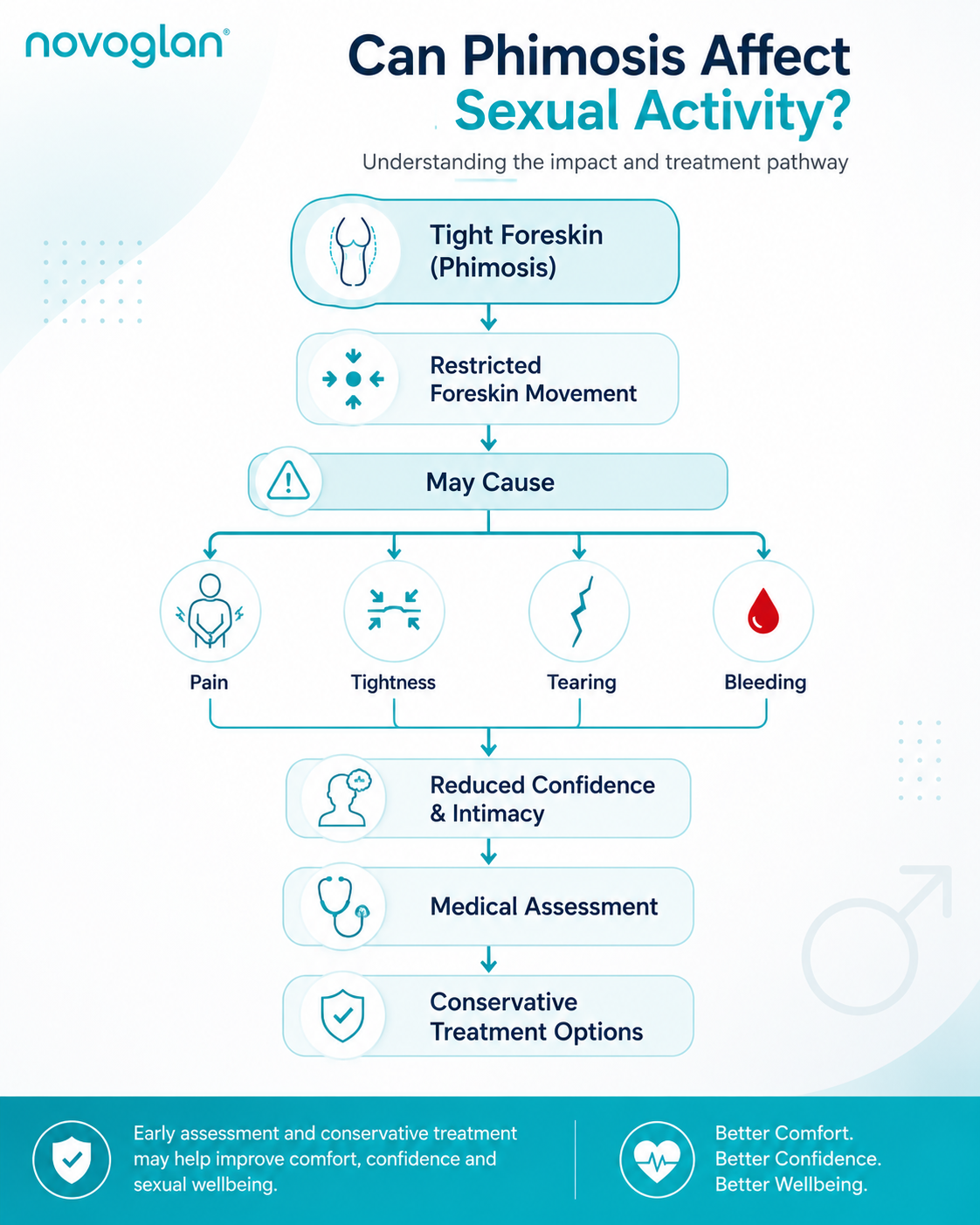
The encouraging news is that many cases of mild to moderate phimosis can be managed without surgery. Conservative treatment options, including gentle foreskin stretching and other non-surgical approaches, may help improve foreskin flexibility and reduce discomfort over time.
If a tight foreskin is making sex uncomfortable, the Novoglan Treatment Kit is designed to help improve foreskin flexibility using gentle tissue expansion. Learn how it works, who it's suitable for, and what to expect during treatment.
Is Foreskin Tightness Making Intimacy Uncomfortable?
The Novoglan Treatment Kit uses gentle tissue expansion to improve foreskin flexibility without surgery.
Explore the Novoglan Kit →In the following sections, we will look at the specific ways phimosis can affect erections, intercourse, confidence, and overall sexual wellbeing.
How Phimosis Can Affect Sexual Activity
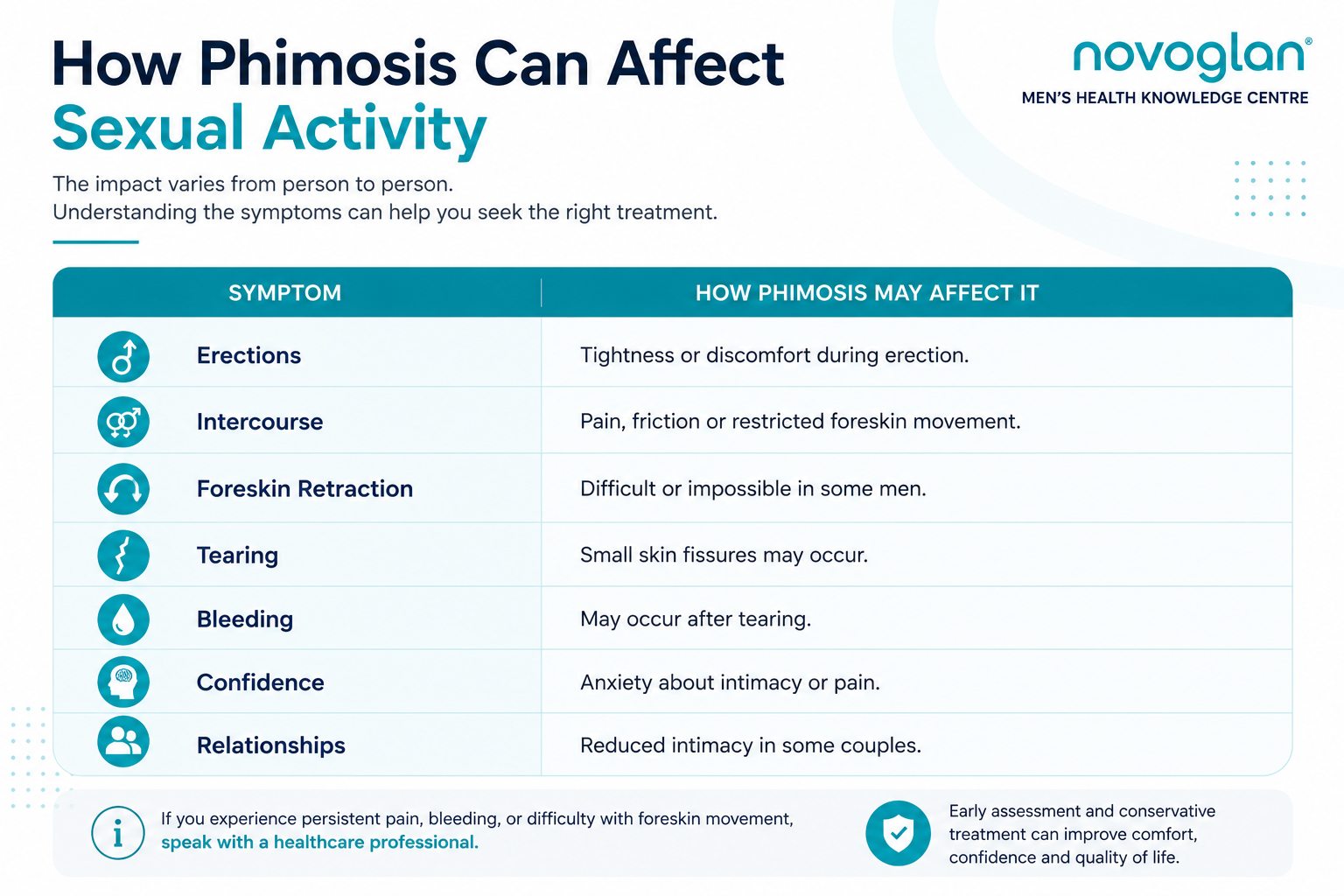
The way phimosis affects sexual activity varies from person to person. Some men experience little or no discomfort, while others may find that a tight foreskin causes physical symptoms that affect their confidence, comfort and enjoyment of intimacy.
The severity of symptoms usually depends on how tight the foreskin is and whether there is associated inflammation, scarring or infection.
Pain During Erections
As the penis becomes erect, the foreskin naturally stretches. If the foreskin is too tight, this stretching may cause discomfort, a feeling of tightness or pain. In more severe cases, a tight foreskin can restrict normal skin movement, leading to discomfort during erections.
Persistent pain during erections is not something you should ignore, particularly if it affects your quality of life or sexual wellbeing.
Many men find that reducing friction during treatment helps improve comfort during daily activities and intimacy. The Novoglan Device + Sexual Wellness Kit combines the treatment device with specially selected care products to support your treatment routine.
Combine your treatment routine with a specialised sexual wellness routine to minimise friction and support tissue elasticity.
Learn more about Novoglan Conditioning Care →Pain During Intercourse
One of the most common concerns reported by men with phimosis is pain during sex.
During intercourse, the foreskin normally moves freely over the glans. A tight foreskin may restrict this movement, creating friction and discomfort. Some men experience mild tightness, while others may develop significant pain that makes sexual activity difficult or causes them to avoid intimacy altogether.
If intercourse is consistently painful, it is important to seek medical advice rather than continuing through the discomfort.
Some men also ask whether phimosis can affect activities involving increased foreskin movement, sometimes referred to as foreskin docking. As with intercourse, a tight foreskin may restrict normal movement, making these activities uncomfortable or increasing the risk of small tears if the foreskin is forced beyond its natural flexibility.
Difficulty Retracting the Foreskin
Some men with phimosis can retract the foreskin when the penis is flaccid but not when it is erect. Others may be unable to retract it at all.
Limited foreskin movement can make sexual activity feel uncomfortable and may also make it more difficult to maintain good hygiene, increasing the risk of irritation or infections such as balanitis.
Tearing or Bleeding
If the foreskin is stretched beyond its natural limit during sexual activity, small tears (known as fissures) can occur.
These tears may cause the following:
- Pain
- Bleeding
- Stinging during urination
- Temporary swelling
Repeated tearing can lead to scar tissue forming as the skin heals. Because scar tissue is less elastic than healthy skin, the condition may gradually make the foreskin even tighter over time.
Reduced Confidence and Anxiety
The impact of phimosis isn't always physical. Worrying about pain, tearing or embarrassment can affect confidence and make sexual activity feel stressful rather than enjoyable.
Some men become anxious about intimacy or avoid sexual relationships altogether because they're concerned about how their condition might affect their partner or whether intercourse will be painful.
These feelings are common, and it's important to remember that phimosis is a recognised medical condition, not something to be embarrassed about. Seeking advice early may help address both the physical symptoms and the anxiety they can cause.
Impact on Intimacy
When sexual activity becomes painful or causes ongoing worry, it can affect intimacy within a relationship. Some men may avoid physical closeness because they're concerned about discomfort or fear injuring the foreskin.
Open communication with your partner and seeking appropriate treatment can often help reduce anxiety and improve both physical comfort and confidence over time.
For many men, managing the underlying phimosis with conservative treatment or other appropriate medical care allows them to return to comfortable, satisfying sexual activity.
Can Phimosis Cause Erectile Dysfunction?
Phimosis does not usually cause erectile dysfunction (ED). Most men with phimosis are still able to achieve and maintain an erection. However, if the foreskin is very tight, it may cause pain, a feeling of tightness, or discomfort during erections, which can affect confidence and make sexual activity less enjoyable.
In some cases, anxiety about pain, tearing, or bleeding during sex may make it more difficult to relax, which can indirectly affect sexual performance. This condition is different from erectile dysfunction, where achieving or maintaining an erection is the primary problem.
If you experience persistent erectile difficulties, it is important to speak with a healthcare professional, as ED can have many physical and psychological causes unrelated to phimosis.
Can Phimosis Affect Fertility?
Phimosis does not usually affect fertility directly. Most men with phimosis produce normal sperm and are capable of fathering children.
However, severe phimosis may make sexual intercourse uncomfortable or difficult, particularly if it causes pain or tearing or prevents satisfactory penetration. In these situations, the condition may indirectly affect the ability to conceive by making regular intercourse more challenging.
Recurrent infections, such as balanitis, should also be treated promptly, as ongoing inflammation may affect comfort and sexual wellbeing. If you're concerned about fertility or are having difficulty conceiving, it's important to seek medical advice so that both partners can be assessed appropriately.
Can You Continue Having Sex with Phimosis?
For many men, yes. If the phimosis is mild and does not cause pain, tearing, or significant tightness, sexual activity can often continue safely.
However, if sex regularly causes discomfort, bleeding, or repeated injury to the foreskin, it's best to avoid forcing intercourse and seek medical advice. Continuing sexual activity despite significant pain may increase the risk of small tears, scarring, and further tightening of the foreskin.
Using adequate lubrication may help reduce friction during sexual activity, but it does not treat the underlying cause of phimosis.
If a tight foreskin is affecting your comfort or confidence, conservative treatment options such as gentle foreskin stretching, prescription topical corticosteroids (where appropriate), or purpose-designed medical devices may help improve foreskin flexibility over time.
The most important message is that pain during sex is not something you should simply accept. If phimosis is affecting your sexual wellbeing or your relationship, effective treatment options are available, and seeking advice early may help prevent the condition from worsening.
Treatment Options
If phimosis is affecting your comfort, confidence or sexual activity, several treatment options are available. The most appropriate approach depends on the severity of the condition, the presence of scarring, and your individual circumstances. Many men with mild to moderate phimosis can be successfully managed without surgery.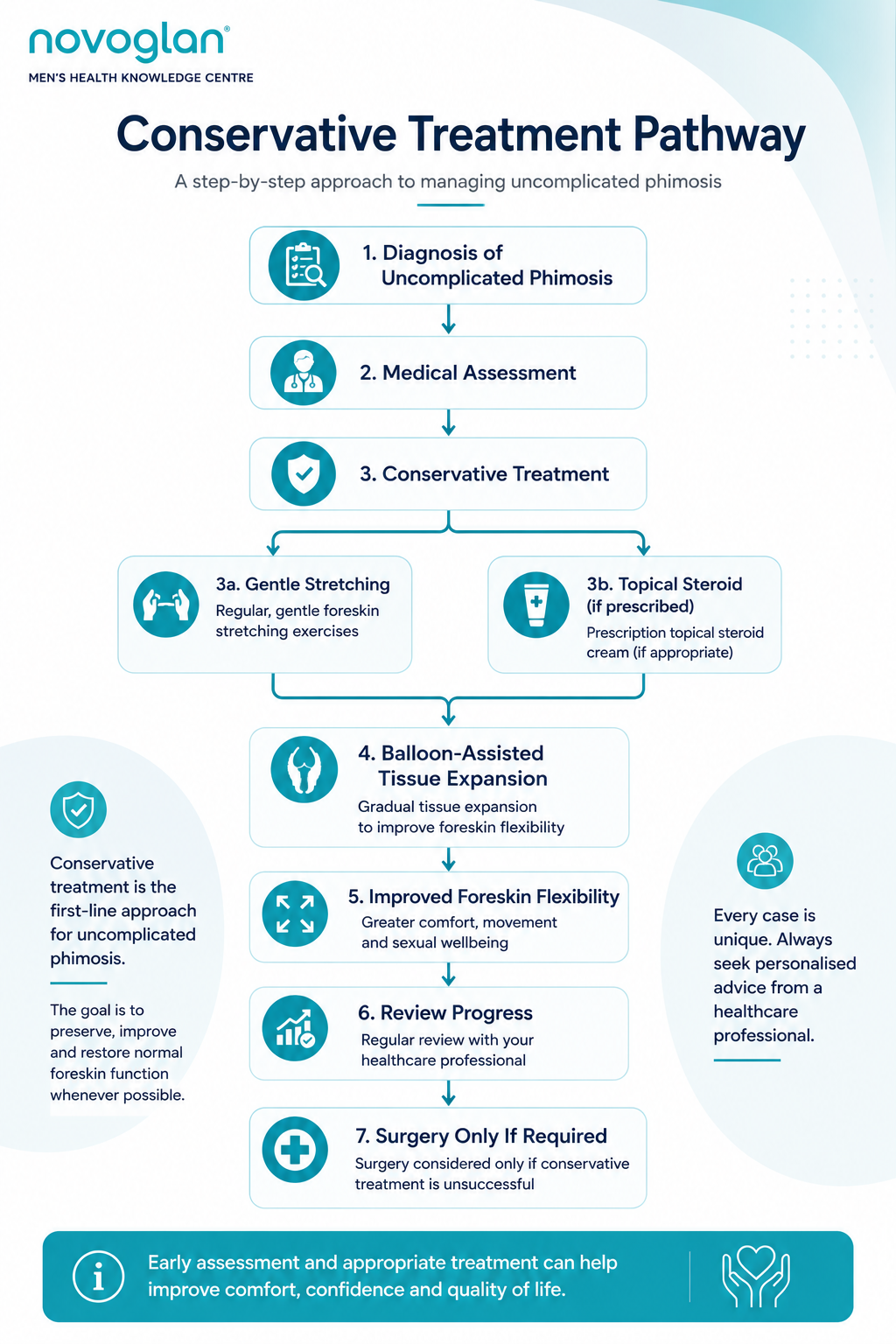
Conservative Treatment
Conservative treatment is usually the first approach for uncomplicated phimosis. The goal is to improve foreskin flexibility while preserving the foreskin, often avoiding the need for surgery.
For many men with uncomplicated phimosis, conservative treatment may be appropriate before surgery is considered. The Novoglan Treatment Kit is a home-based medical device designed to support gradual tissue expansion while preserving the foreskin.
Gentle Foreskin Stretching
Gentle foreskin stretching is a widely recommended non-surgical treatment for mild to moderate phimosis. Regular, controlled stretching encourages the skin to gradually become more flexible, making foreskin retraction easier over time.
Balloon-Assisted Stretching
Balloon-assisted stretching uses a purpose-designed medical device like Novoglan to apply gentle, even pressure around the tight foreskin. For many men, this method provides a more structured approach than manual stretching and supports gradual tissue expansion.
Topical Steroid Creams
Healthcare professionals may prescribe a topical corticosteroid cream to help soften and improve the elasticity of the foreskin. These creams are often used alongside stretching exercises to improve treatment outcomes.
Supporting Foreskin Care
Some men also choose to use a non-steroidal conditioning cream as part of their daily foreskin care routine to help keep the skin moisturised and comfortable. Unlike prescription topical corticosteroids, conditioning creams are not medicines and are not intended to treat phimosis, but they may help support healthy skin during everyday care
Surgery
If phimosis is severe, caused by significant scarring, or does not improve with conservative treatment, surgery may be recommended. Depending on the individual case, surgical options may include foreskin-preserving procedures or circumcision.
Want to learn more? Read our comprehensive guide to phimosis: causes, symptoms, treatment & non-surgical options, where we explain each treatment approach in detail and discuss when conservative treatment may be appropriate.
Take Control of Your Foreskin Health
Discover safe, discrete, and effective non-surgical treatment options designed to restore comfort and confidence.
View Non-Surgical Treatment OptionsWhen Should You See a Doctor?
If phimosis is affecting your sexual activity, remember that you don't have to live with pain or discomfort during sex. Early assessment can help identify the underlying cause and determine the most appropriate treatment before the condition worsens.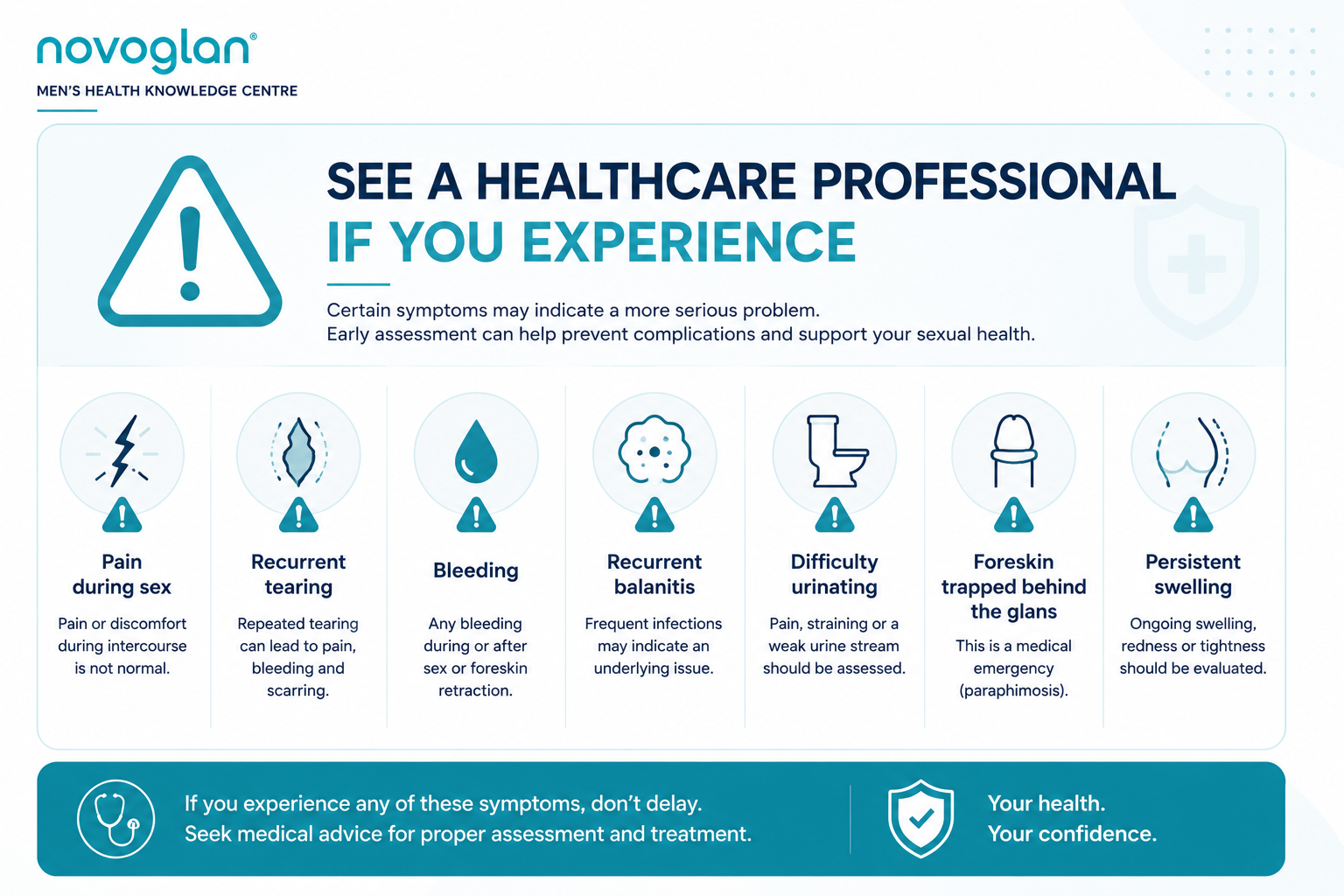
You should seek medical advice if:
- You experience pain during erections or sexual activity.
- Your foreskin repeatedly tears or bleeds during intercourse.
- You are unable to retract your foreskin by adulthood.
- You develop recurrent infections such as balanitis.
- You notice scarring, a tight white ring, or persistent swelling of the foreskin.
- Urination becomes difficult or the foreskin balloons during urination.
- Your symptoms are affecting your confidence, relationships or overall quality of life.
- The foreskin becomes trapped behind the head of the penis (paraphimosis), which is a medical emergency that requires immediate treatment.
Seeking advice early may help you access conservative treatment options before more invasive procedures need to be considered.
References
- World Health Organisation. Defining sexual health: report of a technical consultation on sexual health, 28–31 January 2002, Geneva. Geneva: World Health Organisation; 2006. Available from: https://www.who.int/publications/m/item/defining-sexual-health
- European Association of Urology. EAU Guidelines on Sexual and Reproductive Health. Arnhem: European Association of Urology; 2025. Available from: https://uroweb.org/guidelines/sexual-and-reproductive-health
- American Urological Association. Clinical Guidelines. Linthicum (MD): American Urological Association. Available from: https://www.auanet.org/guidelines
- National Institute for Health and Care Excellence (NICE). Clinical Knowledge Summaries: Phimosis and Paraphimosis. London: NICE. Available from: https://cks.nice.org.uk
- Morris BJ, Krieger JN. Does male circumcision affect sexual function, sensitivity, or satisfaction? A systematic review. J Sex Med. 2013;10(11):2644-2657. doi:10.1111/jsm.12293
- Shankar KR, Rickwood AMK. The incidence of phimosis in boys. BJU Int. 1999;84(1):101-102. doi:10.1046/j.1464-410X.1999.00147.x
- Kuehhas FE, Miernik A, Weibl P, Schoenthaler M. Conservative treatment of phimosis in adults. Urologe A. 2015;54(4):527-533. doi:10.1007/s00120-014-3731-3
- Burnett AL, Nehra A, Breau RH, et al. Erectile Dysfunction: AUA Guideline. J Urol. 2018;200(3):633-641. doi:10.1016/j.juro.2018.05.004
- Edwards S. Balanitis and balanoposthitis: a review. Genitourin Med. 1996;72(3):155-159. doi:10.1136/sti.72.3.155
- Healthdirect Australia. Phimosis. Available from: https://www.healthdirect.gov.au
- NHS. Phimosis (tight foreskin). Available from: https://www.nhs.uk/conditions/phimosis/
- Urology Care Foundation. Adult Circumcision and Foreskin Conditions. Available from: https://www.urologyhealth.org
- International Society for Sexual Medicine. Patient Information Library. Available from: https://www.issm.info
- Royal Australian College of General Practitioners. Guidelines for preventive activities in general practice (Red Book). Melbourne: RACGP. Available from: https://www.racgp.org.au/clinical-resources/clinical-guidelines/key-racgp-guidelines/view-all-racgp-guidelines/red-book
- Centers for Disease Control and Prevention. Sexually Transmitted Infections (STIs). Available from: https://www.cdc.gov/sti