 FREE & FAST SHIPPING for orders over
  USA (Americas):
  UK (Europe):
  AUSTRALIA (Asia)


Phimosis vs. Paraphimosis: What is the Difference, and When Is It an Emergency?
Posted by Kinza Khan, PharmD
22nd Jul 2026
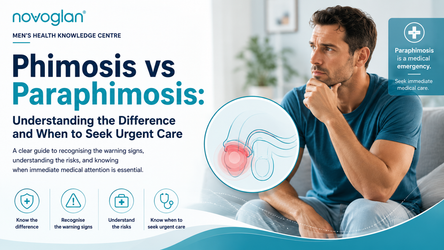
If you have been diagnosed with phimosis or have a tight foreskin, you've probably come across the term paraphimosis. Although the two conditions are closely related, they are not the same. While phimosis usually develops gradually and can often be managed with conservative treatment, paraphimosis is a medical emergency that requires immediate attention.
Paraphimosis occurs when a tight foreskin is pulled back behind the head of the penis (glans) and becomes trapped, preventing it from returning to its normal position. As swelling develops, the foreskin can become increasingly difficult to reposition, potentially restricting blood flow to the glans. Without prompt medical treatment, serious complications may occur.
The good news is that paraphimosis is uncommon and often preventable. Understanding the warning signs, knowing when to seek urgent medical care, and treating an underlying tight foreskin appropriately can help reduce the risk of this complication.
In this guide, we'll explain the difference between phimosis and paraphimosis, the symptoms to watch for, why paraphimosis is considered a medical emergency, how it's treated, and what steps may help reduce your risk in the future.
Quick Answer
What is paraphimosis?
Paraphimosis is a medical emergency that occurs when a tight foreskin is pulled back behind the head of the penis (glans) and cannot be returned to its normal position. As the foreskin becomes trapped, swelling can increase, making it even more difficult to reposition and potentially restricting blood flow to the glans.
Is paraphimosis the same as phimosis?
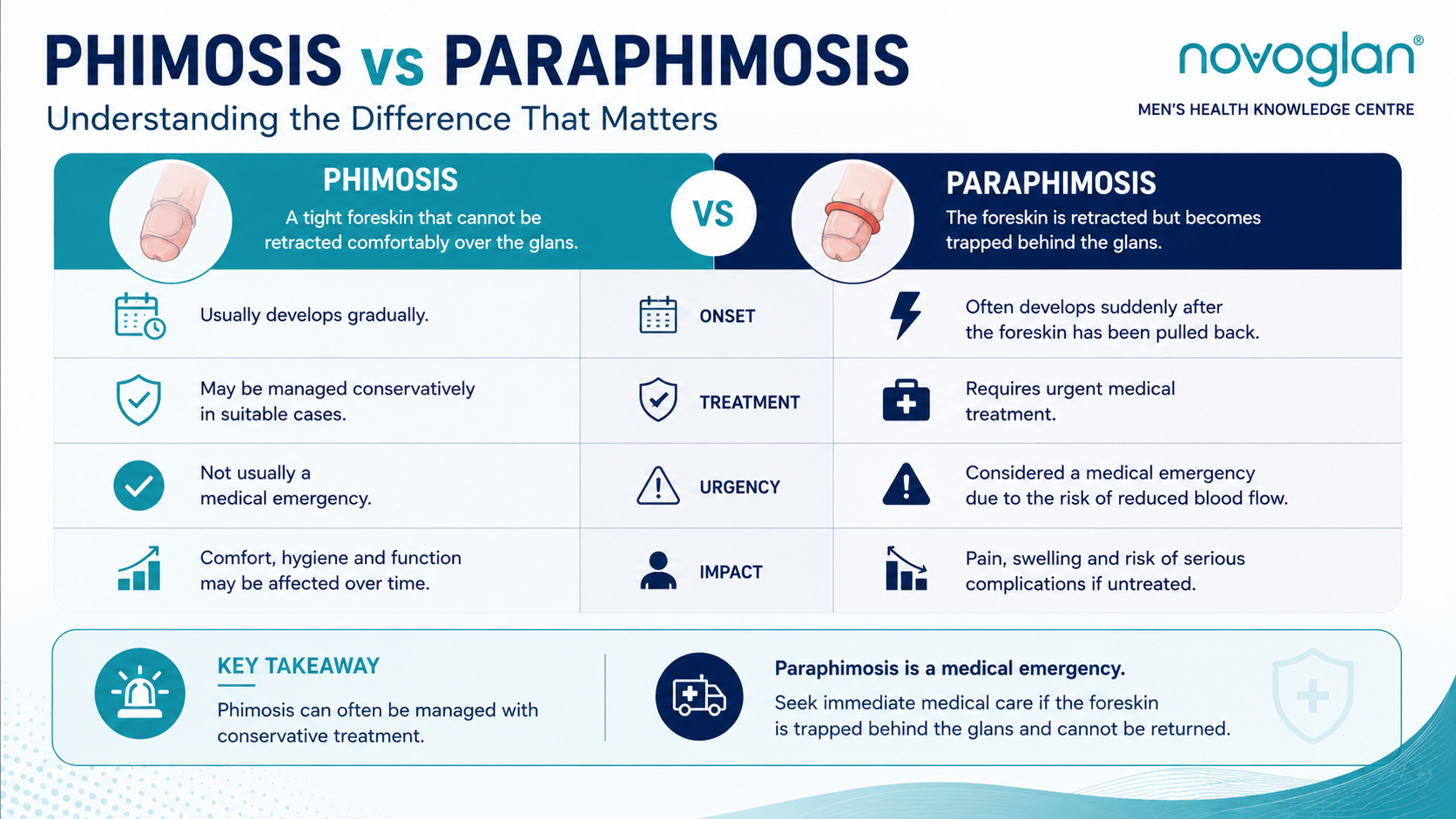
No. Phimosis is a condition where the foreskin is too tight to retract comfortably over the glans. Paraphimosis occurs when that tight foreskin is retracted but becomes stuck behind the glans and cannot be pulled forward again. While phimosis often develops gradually and can frequently be managed with conservative treatment, paraphimosis requires urgent medical attention.
Is paraphimosis an emergency?
Yes. Paraphimosis should be treated as a medical emergency. Without prompt treatment, the trapped foreskin may continue to swell, potentially reducing blood flow to the head of the penis and increasing the risk of tissue damage. If you think you have paraphimosis, seek immediate medical care or attend your nearest emergency department.
Can paraphimosis be prevented?
In many cases, yes. The risk of paraphimosis can often be reduced by avoiding forceful retraction of a tight foreskin and ensuring the foreskin is returned to its normal position after cleaning, medical examinations or catheterisation. For men with uncomplicated phimosis, treating the underlying tight foreskin through appropriate conservative management may also help reduce the likelihood of paraphimosis developing in the future.
Phimosis vs Paraphimosis
Although phimosis and paraphimosis both involve the foreskin, they are different conditions that require different approaches to treatment.
Phimosis occurs when the foreskin is too tight to be comfortably retracted over the head of the penis (glans). It often develops gradually and can usually be managed with conservative treatments such as gentle foreskin stretching or prescription topical corticosteroid creams under the guidance of a healthcare professional.
Paraphimosis, on the other hand, occurs when a tight foreskin has already been pulled back behind the glans but becomes trapped and cannot be returned to its normal position. As swelling develops, the foreskin may tighten further around the shaft of the penis, restricting blood flow to the glans. Unlike uncomplicated phimosis, paraphimosis is a medical emergency that requires urgent treatment.
Understanding the difference between these conditions is important because the recommended treatment is very different. While phimosis often allows time to consider conservative treatment options, paraphimosis requires immediate medical assessment to reduce the risk of serious complications.
Treating the Underlying Cause May Help Reduce Future Risk
If you have been diagnosed with uncomplicated phimosis, treating the underlying tight foreskin may help reduce the likelihood of future complications, including paraphimosis.
Learn how the Novoglan Treatment Kit supports gentle, balloon-assisted foreskin stretching as part of a conservative, foreskin-preserving treatment approach.
→ Explore the Novoglan Treatment Kit
Signs and Symptoms
Recognising the symptoms of paraphimosis early is important, as prompt treatment can help prevent serious complications.
Common signs and symptoms include:
- A foreskin that is stuck behind the head of the penis and cannot be returned to its normal position.
- Swelling of the foreskin or the glans.
- Pain or increasing discomfort.
- A tight band of foreskin around the shaft just behind the glans.
- In some cases, there may be difficulty passing urine.
- Changes in the colour of the glans, such as a dark red, blue or purple appearance, which may indicate reduced blood flow.
These symptoms should not be ignored. If your foreskin is trapped behind the glans and you cannot gently return it to its normal position, seek urgent medical attention.
Why Is Paraphimosis a Medical Emergency?
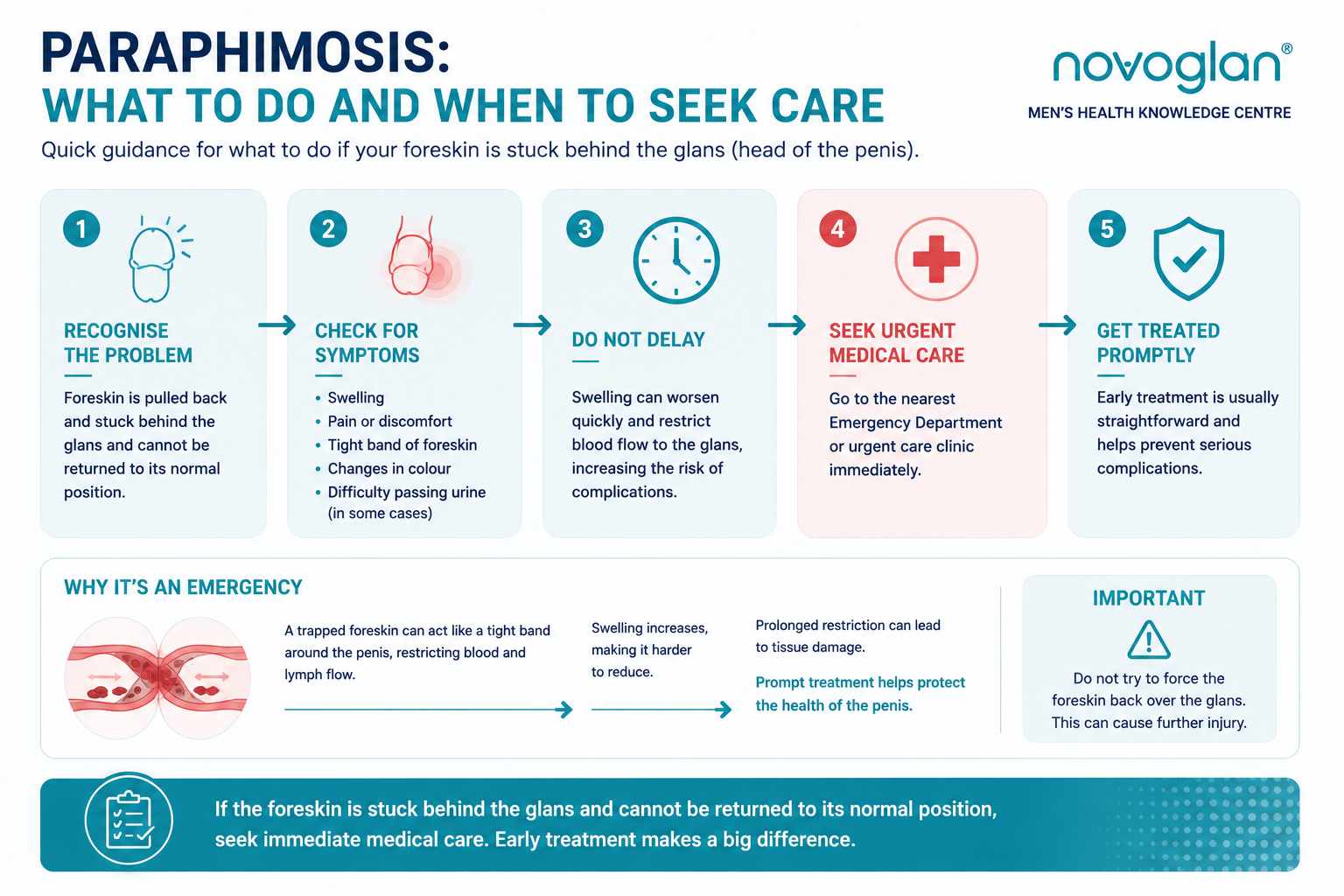
When the foreskin becomes trapped behind the glans, it acts like a tight band around the penis. This can restrict the normal flow of blood and lymphatic fluid, causing swelling that makes the foreskin even more difficult to reposition. As the swelling increases, pressure around the glans may continue to build.
Without prompt treatment, prolonged restriction of blood flow can lead to tissue damage and, in rare cases, permanent injury to the penis. Early treatment is usually straightforward and helps reduce the risk of complications, which is why paraphimosis should always be treated as a medical emergency.
If you suspect you have paraphimosis, do not delay seeking medical care. Attend your nearest emergency department or seek urgent assessment from a healthcare professional as soon as possible. Prompt treatment offers the best chance of relieving the trapped foreskin and preventing long-term complications.
When Should You Seek Medical Attention?
Knowing when to seek medical attention can help prevent complications. While phimosis often allows time for a routine medical assessment, paraphimosis should never be ignored. If your foreskin becomes trapped behind the head of the penis and cannot be gently returned to its normal position, prompt medical treatment is essential.
The table below provides a general guide to when routine medical care may be appropriate and when emergency treatment is recommended.
|
Situation |
Recommended Action |
|
Your foreskin is tight but can still be partially retracted. |
Arrange a routine appointment with your healthcare professional to discuss treatment options. |
|
You experience discomfort, pain during erections, or repeated infections associated with a tight foreskin. |
Seek a medical assessment to determine whether conservative treatment or another approach is appropriate. |
|
Your foreskin becomes trapped behind the head of the penis and cannot be pulled forward again. |
Seek immediate medical attention. This may be paraphimosis, which is considered a medical emergency. |
|
The foreskin or glans becomes increasingly swollen after the foreskin has been retracted. |
Attend your nearest emergency department or seek urgent medical care immediately. |
|
The glans changes colour (such as becoming dark red, blue or purple), or you experience severe pain or difficulty passing urine. |
Seek emergency medical treatment without delay |
What Causes Paraphimosis?
Paraphimosis occurs when the foreskin is pulled back behind the head of the penis (glans) but cannot be returned to its normal position. As the foreskin remains trapped, swelling may develop, making it increasingly difficult to reposition and potentially restricting blood flow to the glans.
Several situations can lead to paraphimosis, including:
- Forcefully retracting a tight foreskin.
- Forgetting to return the foreskin to its normal position after cleaning.
- Leaving the foreskin retracted after sexual activity or masturbation.
- Medical procedures, such as urinary catheter insertion or genital examinations, where the foreskin is not replaced afterwards.
- Swelling caused by infection, inflammation or injury.
Although paraphimosis can occasionally occur in men without a history of phimosis, it is most commonly associated with a tight foreskin. Understanding the underlying cause is important because treating the phimosis may help reduce the risk of future episodes.
Looking for a Conservative Approach?
For suitable men with uncomplicated phimosis, healthcare professionals may recommend conservative treatment before surgery.
Discover how controlled balloon-assisted tissue expansion can gradually improve foreskin flexibility.
→ Learn More About Conservative Treatment
Who Is Most at Risk?
Paraphimosis can affect males of any age, but some people are more likely to develop the condition than others.
You may be at greater risk if you:
- Have a tight foreskin (phimosis).
- Force the foreskin back despite discomfort or resistance.
- Have recurrent episodes of balanitis or foreskin inflammation.
- Have swelling of the foreskin due to infection or injury.
- Have recently undergone catheterisation or another medical procedure that involved the foreskin.
- Have diabetes or another condition that increases the risk of foreskin infections.
- Have difficulty maintaining good foreskin hygiene because the foreskin is difficult to retract.
Having one or more of these risk factors does not mean you will develop paraphimosis. However, recognising these risk factors can help you take steps to reduce your risk and seek treatment for an underlying tight foreskin before complications develop.
What Should You Do If It Happens?
If you think you have paraphimosis, it's important to seek urgent medical attention. The longer the foreskin remains trapped behind the glans, the greater the risk of swelling, reduced blood flow and tissue damage.
While waiting for medical assessment:
- Stay as calm as possible and avoid repeatedly pulling or forcing the foreskin.
- Do not continue attempting to reposition the foreskin if it causes significant pain or resistance.
- Remove any restrictive jewellery or clothing that may increase pressure around the area.
- Seek immediate medical care by attending your nearest emergency department or urgent care service.
Healthcare professionals can often treat paraphimosis by reducing the swelling and carefully returning the foreskin to its normal position. In some cases, additional procedures may be required if the swelling is severe or the foreskin cannot be safely repositioned.
Prompt treatment usually results in a positive outcome, which is why paraphimosis should never be ignored.
Concerned About a Tight Foreskin?
If you are experiencing recurring tightness, discomfort or difficulty retracting your foreskin, speak with your healthcare professional about available treatment options.
Read more about non-surgical phimosis treatment and whether it may be appropriate for you.
How Is Paraphimosis Treated?
Because paraphimosis is a medical emergency, treatment should be provided by a healthcare professional as soon as possible. The primary goal is to reduce swelling and gently return the foreskin to its normal position over the glans, restoring normal blood flow.
Treatment will depend on the severity of the condition but may include:
- Reducing swelling using compression or other medical techniques.
- Gentle manual repositioning of the foreskin.
- Pain relief or local anaesthetic where appropriate.
- A minor surgical procedure if the foreskin cannot be safely repositioned.
- Circumcision or another foreskin procedure in selected cases, particularly if paraphimosis recurs or significant phimosis is present.
Following successful treatment, your healthcare professional may recommend investigating the underlying cause, particularly if a tight foreskin (phimosis) contributed to the episode.
Can Paraphimosis Be Prevented?
Although paraphimosis cannot always be prevented, there are several simple steps that may help reduce the risk.
One of the most effective ways to reduce the risk of paraphimosis is to avoid forcibly retracting a tight foreskin. For men with uncomplicated phimosis, addressing the underlying tightness through conservative treatment may help reduce the likelihood of future complications. Depending on your individual circumstances, the treatment may include gentle foreskin stretching under the guidance of a healthcare professional. For suitable men, the Novoglan Treatment Kit is designed to support controlled, balloon-assisted stretching as part of a conservative, foreskin-preserving treatment approach.
These include:
- Never forcing a tight foreskin to retract.
- Always returning the foreskin to its normal position after cleaning, urination, sexual activity or medical procedures.
- Practising good foreskin hygiene.
- Seeking treatment if you have a persistent tight foreskin or recurrent foreskin infections.
- Following your healthcare professional's advice if you have previously experienced paraphimosis.
Recognising and treating a tight foreskin before complications develop is one of the most effective ways to reduce the risk of future problems.
Can Treating Phimosis Reduce the Risk?
In many cases, yes. Because phimosis is one of the main risk factors for paraphimosis, treating the underlying tight foreskin may help reduce the likelihood of the foreskin becoming trapped behind the glans in the future.
For men with uncomplicated phimosis, healthcare professionals may recommend conservative treatment before they consider surgery. Depending on your individual circumstances, the treatment may include gentle foreskin stretching, prescription topical corticosteroid creams, or balloon-assisted stretching using a purpose-designed medical device.
One example is the Novoglan Treatment Kit, which supports gentle, balloon-assisted foreskin stretching as part of a conservative treatment programme. By helping improve foreskin flexibility in suitable men, conservative management may reduce the risk factors associated with paraphimosis. However, Novoglan is not a treatment for paraphimosis itself and should never be used if the foreskin is already trapped behind the glans. In that situation, immediate medical assessment is essential.
If you've experienced paraphimosis or have concerns about a tight foreskin, speak with your healthcare professional about the treatment options most appropriate for your individual circumstances. Early management of phimosis may help reduce the risk of future complications while preserving the foreskin where appropriate.
Frequently Asked Questions
Is paraphimosis the same as phimosis?
No. Phimosis is a condition where the foreskin is too tight to retract comfortably over the head of the penis. Paraphimosis occurs when the foreskin has been pulled back behind the glans and becomes trapped, preventing it from returning to its normal position. While phimosis can often be managed conservatively, paraphimosis is a medical emergency that requires urgent treatment.
Can paraphimosis go away on its own?
Paraphimosis should not be expected to resolve without medical assessment. As swelling increases, the foreskin may become even more difficult to reposition, increasing the risk of complications. If you think you have paraphimosis, seek immediate medical attention.
Can paraphimosis cause permanent damage?
If left untreated, paraphimosis can reduce blood flow to the head of the penis, which may lead to tissue damage and other serious complications. Fortunately, prompt medical treatment usually results in a good outcome and significantly reduces the risk of long-term problems.
Can paraphimosis happen more than once?
Yes. If the underlying cause, such as a tight foreskin (phimosis), is not addressed, paraphimosis may recur. After treatment, your healthcare professional may suggest either conservative management or another treatment to help reduce the risk of future episodes.
Can treating phimosis help prevent paraphimosis?
Often, yes. Because a tight foreskin is one of the main risk factors for paraphimosis, treating uncomplicated phimosis may help reduce the likelihood of future episodes. Depending on your individual circumstances, the treatment may include gentle foreskin stretching, prescription topical corticosteroid creams, or balloon-assisted stretching under the guidance of a healthcare professional.
Preserve Your Foreskin While Treating Phimosis
For suitable adults diagnosed with uncomplicated phimosis, the Novoglan Treatment Kit provides gentle, balloon-assisted stretching that helps improve foreskin flexibility over time.
Learn how conservative treatment may help preserve the foreskin while improving function.
Should I try to force the foreskin back if it becomes stuck?
No. If the foreskin is trapped behind the glans and cannot be gently returned to its normal position, do not continue forcing it back, as the situation may worsen pain or swelling. Seek immediate medical assessment so appropriate treatment can be provided.
Conclusion
Although phimosis and paraphimosis both involve the foreskin, they are completely unique conditions. Phimosis often develops gradually and, for many men, can be managed successfully with conservative treatment. Paraphimosis, however, is a medical emergency that requires prompt assessment and treatment to prevent serious complications.
Recognising the warning signs and seeking immediate medical care if the foreskin becomes trapped behind the glans is essential. Early treatment usually leads to the best outcomes and helps reduce the risk of long-term damage.
If you have a tight foreskin, addressing the underlying phimosis may help reduce the risk of future complications. For suitable men, conservative treatment options such as gentle foreskin stretching, prescription topical corticosteroid creams, and balloon-assisted stretching with the Novoglan Treatment Kit may help improve foreskin flexibility while keeping the foreskin intact. Speak with your healthcare professional to determine the most appropriate treatment for your individual circumstances.
References
- European Association of Urology. EAU Guidelines on Sexual and Reproductive Health. Arnhem (Netherlands): European Association of Urology; 2025. Available from: https://uroweb.org/guidelines/sexual-and-reproductive-health
- American Urological Association. Medical Student Curriculum: Benign Urologic Conditions. Linthicum (MD): American Urological Association; Available from: https://www.auanet.org/education
- American Academy of Family Physicians. Paraphimosis: Current Treatment Options. Am Fam Physician. 2000;62(12):2623-2626: https://www.aafp.org/pubs/afp/issues/2000/1215/p2623.html
- British Association of Urological Surgeons. Tight foreskin (phimosis). London: BAUS: https://www.baus.org.uk/patients/conditions/
- Cleveland Clinic. Paraphimosis. Cleveland (OH): Cleveland Clinic: https://my.clevelandclinic.org/health/diseases/22244-paraphimosis
- Cleveland Clinic. Phimosis. Cleveland (OH): Cleveland Clinic: https://my.clevelandclinic.org/health/diseases/22065-phimosis
- Merck Manual Professional Edition. Paraphimosis. Kenilworth (NJ): Merck & Co., Inc: https://www.merckmanuals.com/professional
- NHS. Phimosis. London: National Health Service: https://www.nhs.uk
- Royal Australian College of General Practitioners. Penile appearance, lumps and bumps. East Melbourne (VIC): RACGP: https://www.racgp.org.au/afp
- Campbell-Walsh-Wein Urology. 13th ed. Philadelphia: Elsevier; 2025.
- Wein AJ, Kavoussi LR, Partin AW, Peters CA, editors. Campbell-Walsh-Wein Urology. 13th ed. Philadelphia: Elsevier; 2025.
- Kumar P, Clark M. Kumar & Clark's Clinical Medicine. 10th ed. London: Elsevier; 2020.
- Bhat A. General principles of tissue expansion in reconstructive surgery. Indian J Plast Surg. 2009;42(Suppl):S15-S20.
- Gross MS, Phillips EA, Carrasquillo RJ, Thornton AC. The home-based foreskin balloon dilation procedure: a less invasive treatment option for phimosis. Transl Androl Urol. 2019;8(Suppl 1):S29-S34.
- American Academy of Paediatrics. Care of the Uncircumcised Penis. Paediatrics: https://publications.aap.org