 FREE & FAST SHIPPING for orders over
  USA (Americas):
  UK (Europe):
  AUSTRALIA (Asia)


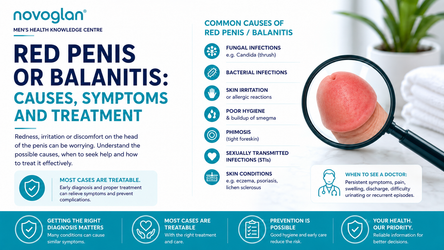
Red Penis (Balanitis): Causes, Symptoms, Treatment & When to See a Doctor
Posted by Kinza Khan, PharmD
14th Jul 2026
Red Penis (Balanitis): Causes, Symptoms, Treatment & When to See a Doctor
What is causing my penis to be red and inflamed?
Redness is most commonly caused by balanitis (inflammation of the glans). Other common causes include fungal or bacterial infections, skin allergies, irritation from soaps, and tight foreskin (phimosis).
Is balanitis easily treatable?
Yes. Most cases resolve quickly with proper hygiene, antifungal or antibiotic creams, and by addressing underlying triggers like hygiene habits or tight foreskin.
When should I see a doctor for penis redness?
You should consult a healthcare professional if the redness persists, causes severe discomfort, or is accompanied by swelling, discharge, pain during urination, or skin cracking.
Having Trouble Retracting Your Foreskin?
Recurrent balanitis is often linked to tight foreskin (phimosis). Treat the root cause safely and naturally at home without surgery.
Explore Non-Surgical Treatment Kits →100% Plain, Discreet Packaging & Fast Worldwide Shipping
What Is Balanitis?
Balanitis is inflammation of the head of the penis (glans). In uncircumcised men, the foreskin may also become inflamed, a condition known as balanoposthitis. Balanitis is relatively common and can affect males of any age, although it occurs more frequently in uncircumcised men and in those with underlying risk factors such as diabetes or a tight foreskin (phimosis).
The condition itself is not a disease, but rather a sign that the skin has become inflamed. This inflammation may be caused by fungal or bacterial infections, skin conditions such as eczema or psoriasis, allergic reactions, irritation from soaps or personal care products, poor hygiene, or friction. Identifying the underlying cause is important because treatment will vary depending on what is causing the inflammation.
Fortunately, most cases of balanitis respond well to appropriate treatment. Early assessment and management can help relieve symptoms quickly and reduce the risk of complications such as recurrent infections or foreskin scarring.
Is balanitis serious?
Most cases of balanitis are not serious and usually respond well to appropriate treatment. However, if left untreated, balanitis can become recurrent, cause increasing discomfort, lead to scarring of the foreskin, or contribute to the development or worsening of phimosis.
You should seek medical advice if your symptoms are severe, keep returning, do not improve with treatment, or are accompanied by fever, significant swelling, difficulty passing urine, or persistent pain.
Is balanitis contagious?
Balanitis itself is not contagious, but some of the conditions that cause it may be. For example, balanitis caused by a fungal infection such as Candida (thrush) may be passed between sexual partners, while sexually transmitted infections (STIs) can also cause symptoms similar to balanitis. Because many conditions share similar signs, it's important to obtain an accurate diagnosis rather than assuming the cause.
Can balanitis be treated without circumcision?
In many cases, yes. Most men with balanitis improve with conservative treatment, depending on the underlying cause. This may include improving foreskin hygiene, avoiding irritants, using prescription antifungal or antibiotic medications where appropriate, or treating associated skin conditions.
Effective, Non-Surgical Relief at Home
Overcome tight foreskin and inflammation safely. Discover proven, easy-to-use Novoglan treatment options shipped directly to your door.
Find Your Treatment Kit →100% Plain, Discreet Packaging & Fast Shipping Available
What Does a Red Penis Look Like?
A red penis caused by balanitis can look different from person to person depending on the underlying cause and the severity of the inflammation. In some men, the redness may be mild and limited to a small area of the glans. In others, the entire head of the penis or the foreskin may appear bright red, swollen or irritated.
You may notice:
- Shiny, inflamed or irritated skin.
- Swelling of the glans or foreskin.
- Small red spots or areas of irritation.
- Cracked, dry or peeling skin in some cases.
- Red or pink patches on the head of the penis.
- Redness may affect the foreskin or its opening.
- White patches or a white coating beneath the foreskin.
- Discharge or an unpleasant odour beneath the foreskin may occur.
Because many conditions, including fungal infections, bacterial infections, dermatitis, psoriasis, lichen sclerosus and some sexually transmitted infections (STIs), can cause similar changes in appearance, it is not possible to diagnose balanitis based on appearance alone. If redness persists, worsens or is associated with pain, swelling or discharge, seek medical advice for an accurate diagnosis.
Common Symptoms of Balanitis
The symptoms of balanitis vary depending on the underlying cause but commonly include the following:
- • White discharge or build-up beneath the foreskin
- • Small sores or irritated patches
- • Redness of the head of the penis (glans)
- • Redness or inflammation of the foreskin
- • Pain or discomfort during sexual activity
- • Swelling of the glans or foreskin
- • Difficulty retracting the foreskin
- • Cracked, dry or peeling skin
- • Soreness or tenderness
- • Pain during urination
- • An unpleasant odour
- • Itching or irritation
Some men experience only mild redness and irritation, while others may develop more significant discomfort or swelling. A healthcare professional should promptly assess severe symptoms that are recurrent or accompanied by fever, difficulty passing urine, extensive swelling, or persistent pain.
How do healthcare professionals diagnose balanitis?
In many cases, balanitis can be diagnosed through a medical history and physical examination. Your healthcare professional will ask about your symptoms, when they started, any recent changes to personal care products or sexual activity, your medical history, and whether you've experienced similar episodes before.
During the examination, your doctor will look for signs of inflammation, such as redness, swelling, irritation, discharge or skin changes affecting the glans and foreskin. They may also check whether you have a tight foreskin (phimosis), as this condition can contribute to recurrent episodes of balanitis and influence the most appropriate treatment.
Depending on your symptoms, your healthcare professional may recommend additional tests to identify the underlying cause or rule out other conditions. These may include:
- A swab of any discharge to check for bacterial or fungal infection.
- A urine or blood glucose test if diabetes is suspected, particularly in men with recurrent balanitis.
- Tests for sexually transmitted infections (STIs) if your symptoms or sexual history suggest this may be appropriate.
- A skin biopsy is uncommon in cases where symptoms persist, recur frequently or another skin condition, such as lichen sclerosus or penile cancer, needs to be excluded.
Because several conditions can cause a red penis, it's important not to assume that redness is always balanitis. Fungal infections, bacterial infections, eczema, psoriasis, allergic reactions and some sexually transmitted infections can all produce similar symptoms. An accurate diagnosis helps ensure you receive the most appropriate treatment and avoid unnecessary medications.
If you experience recurrent balanitis, your healthcare professional may also assess for contributing factors such as phimosis, diabetes or underlying skin conditions. Treating these underlying causes may help reduce the likelihood of future episodes.
Noticing a red penis, inflamed foreskin, or irritation around the head of the penis can be worrying. Many men immediately fear the worst or feel too embarrassed to seek advice. The good news is that penis redness is a common symptom and, in many cases, can be successfully treated once the underlying cause is identified.
One of the most common reasons for a red penis is balanitis, an inflammation of the head of the penis (glans) that can also affect the foreskin. However, balanitis is not the only possible cause. Conditions such as fungal (yeast) infections, bacterial infections, skin disorders like eczema or psoriasis, allergic reactions, friction, and sexually transmitted infections (STIs) can all produce similar symptoms. Because many of these conditions look alike, it is important to understand what may be causing your symptoms before starting treatment.
The reassuring news is that most cases of balanitis and penis inflammation respond well to appropriate treatment, particularly when addressed early. Whether the cause is an infection, skin irritation, or an underlying condition such as phimosis (tight foreskin), recognising the symptoms and seeking timely medical advice can help relieve discomfort, reduce the risk of complications, and prevent the problem from returning.
In this guide, you will learn about the causes of a red penis, how to recognise the symptoms of balanitis, the available treatment options, when to see a healthcare professional, and practical steps you can take to help protect your long-term penile and foreskin health.
Is a Red Penis Always Balanitis?
Not necessarily. Although balanitis is one of the most common causes of a red penis, it isn't the only possible explanation. Several skin conditions, infections, allergies and minor injuries can cause redness, irritation or swelling of the penis, and many of these conditions look very similar.
Other possible causes include:
- Contact dermatitis caused by soaps, detergents, condoms or lubricants
- Eczema and psoriasis
- Fungal (Candida) or bacterial infections
- Sexually transmitted infections (STIs) such as genital herpes or syphilis
- Lichen sclerosus, an inflammatory skin condition
- Friction from sexual activity or exercise
- Allergic reactions to personal care products or medications
Because these conditions can share many of the same symptoms, it's not always possible to identify the cause based on appearance alone. If your symptoms are severe, persist for more than a few days, keep returning, or are accompanied by blisters, ulcers, discharge, fever, or difficulty urinating, you should seek medical advice for an accurate diagnosis and appropriate treatment.
What Causes Balanitis?
Balanitis develops when the skin on the head of the penis (glans) becomes inflamed. This inflammation can be triggered by infection, irritation, allergies, skin conditions or underlying health issues. Identifying the underlying cause is important because treatment varies depending on what's causing the inflammation.
Candida (Yeast) Infection
One of the most common causes of balanitis is an overgrowth of Candida, a naturally occurring yeast that thrives in warm, moist environments beneath the foreskin. Risk factors include poor hygiene, recent antibiotic use, diabetes, a weakened immune system and a tight foreskin.
Common symptoms include:
- Itching
- Burning
- Redness
- Increased sensitivity
- White discharge beneath the foreskin
Candida balanitis usually responds well to antifungal treatment when diagnosed correctly.
Bacterial Infection
Bacteria normally live on healthy skin, but they can sometimes multiply and cause infection, particularly if moisture becomes trapped beneath the foreskin.
Symptoms may include:
- Swelling
- Redness
- Unpleasant odour
- Pain or tenderness
- Yellow or white discharge
Because bacterial and fungal infections often look similar, a healthcare professional may recommend further assessment before treatment.
Poor Hygiene and Skin Irritation
In uncircumcised men, sweat, urine and smegma can build up beneath the foreskin if the area is not cleaned regularly. This can create an environment where bacteria and yeast multiply more easily.
At the same time, excessive washing or using perfumed soaps, antiseptics or harsh cleansers can also irritate the delicate skin of the penis. Gentle daily washing with warm water or a mild, fragrance-free cleanser is generally recommended.
Allergic Reactions
The skin of the penis is particularly sensitive and may react to everyday products such as the following:
- Perfumed soaps
- Shower gels
- Laundry detergents
- Latex condoms
- Spermicides
- Personal lubricants
- Topical creams
If symptoms develop after using a new product, avoiding the suspected irritant may allow the skin to heal.
Tight Foreskin (Phimosis)
A tight foreskin (phimosis) is one of the strongest risk factors for recurrent balanitis.
When the foreskin cannot be comfortably retracted, cleaning beneath it becomes difficult. Moisture, bacteria and yeast can become trapped beneath the foreskin, increasing the risk of inflammation and infection.
Is Tight Foreskin Causing Recurrent Balanitis?
When a tight foreskin cannot retract comfortably, it becomes difficult to clean properly. The Novoglan Gentle Foreskin Stretcher Kit provides controlled, comfortable stretching to improve foreskin mobility safely at home.
Explore Gentle Stretcher Kits →Repeated episodes of balanitis may also cause scarring, making the foreskin even tighter and creating a cycle of recurring inflammation.
Supporting Long-Term Foreskin Health
If recurrent balanitis is linked to a tight foreskin, addressing the underlying phimosis may help reduce future flare-ups. The Novoglan Treatment Kit is designed to support gentle, non-surgical foreskin stretching while promoting healthy foreskin care.
Diabetes
Men with diabetes are more likely to develop balanitis because elevated blood glucose levels encourage the growth of bacteria and Candida. Recurrent balanitis can sometimes be an early sign of undiagnosed diabetes.
If symptoms continue to return, your healthcare professional may recommend testing your blood glucose levels.
Skin Conditions
Several skin conditions can affect the penis and resemble balanitis, including:
- Eczema
- Psoriasis
- Lichen planus
- Lichen sclerosus
Because treatment varies depending on the condition, an accurate diagnosis is important.
Weakened Immune System
People with weakened immune systems may be more susceptible to fungal and bacterial infections that cause balanitis. If symptoms are persistent or severe, medical assessment is recommended.
Who Is Most at Risk?
Although balanitis can affect anyone, the risk is higher if you:
- Have diabetes
- Are uncircumcised
- Have a tight foreskin (phimosis)
- Have recently taken antibiotics
- Have a weakened immune system
- Have eczema or another inflammatory skin condition
- Regularly use products that irritate sensitive genital skin
Understanding these risk factors can help you take steps to reduce your chances of developing balanitis or experiencing recurrent episodes.
Can Phimosis Cause Balanitis?
Yes. Phimosis and balanitis are closely connected, and each condition can contribute to the other.
When the foreskin cannot retract comfortably, cleaning beneath it becomes more difficult. Moisture, bacteria, yeast and skin cells can accumulate beneath the foreskin, increasing the likelihood of irritation and infection.
Repeated episodes of balanitis may then cause additional inflammation and scarring, making the foreskin even tighter and increasing the risk of future infections.
This creates a self-perpetuating cycle that can be difficult to break if only the inflammation is treated.
For men who experience both conditions, addressing the underlying phimosis may play an important role in reducing recurrent balanitis and supporting long-term foreskin health.
Related reading: Phimosis (Tight Foreskin): Causes, Symptoms and Non-Surgical Treatment Options.
Treatment Options for Balanitis
The best treatment depends on what is causing the inflammation. Rather than treating every case the same way, healthcare professionals aim to identify and address the underlying cause. Most men experience significant improvement once the appropriate treatment has begun.
Improve Genital Hygiene
Good hygiene is one of the most effective ways to both treat and prevent balanitis. If you are uncircumcised and your foreskin can be comfortably retracted, gently wash beneath the foreskin once daily using warm water or a mild, low-irritant cleanser.
After washing:
- Dry the area thoroughly before replacing the foreskin.
- Don't use strongly fragranced soaps or antiseptics.
- Avoid vigorous scrubbing.
Maintaining healthy hygiene helps reduce moisture, bacteria and yeast that can contribute to inflammation.
Irritation? Use a Gentle Cleansing Soap
Novoglan Gentle Cleansing Soap is formulated to cleanse sensitive skin without drying or causing irritation.
Shop Novoglan Gentle Cleansing Soap →Avoid Irritants
If irritation rather than infection triggers your balanitis, identifying and avoiding the cause is often enough to allow the skin to heal.
Common irritants include:
- Shower gels
- Spermicides
- Bubble baths
- Latex condoms
- Some lubricants
- Perfumed soaps
- Laundry detergents
Switching to products formulated for sensitive skin may help reduce irritation.
Antifungal Treatment
If Candida (yeast) is responsible, your healthcare professional may recommend an antifungal cream or ointment.
Treatment usually continues for one to two weeks, although the exact duration depends on the severity of the infection and your doctor's advice.
If your partner also has a fungal infection, they may require treatment to help reduce the chance of reinfection.
Antibiotics
If a bacterial infection is diagnosed, oral or topical antibiotics may be prescribed. It is important to complete the entire course of treatment, even if symptoms begin improving after a few days.
Because antibiotics are only effective against bacteria, not fungi, they should only be used when recommended by a healthcare professional.
Corticosteroid Creams
If balanitis is caused by inflammatory skin conditions such as eczema or dermatitis, your doctor may prescribe a low-potency topical corticosteroid to help reduce inflammation and itching.
Steroid creams should only be used under medical supervision because inappropriate or prolonged use can thin the skin and may worsen certain infections.
Can Balanitis Be Prevented?
Although not every case can be prevented, adopting effective foreskin care and healthy hygiene habits can significantly reduce the risk of developing balanitis or experiencing recurrent episodes.
Maintain Good Daily Hygiene
Wash the penis gently each day using warm water or a mild, low-irritant cleanser. If you have a retractable foreskin, gently clean beneath it before carefully drying the area.
Dry thoroughly
Moisture trapped beneath the foreskin creates an environment where bacteria and yeast can thrive. After showering, swimming or exercising, gently dry the penis before replacing the foreskin.
Avoid Harsh Soaps
The skin of the penis is extremely sensitive.
Avoid:
- Strong soaps
- Alcohol-based cleansers
- Fragranced body washes
- Antiseptic products unless specifically recommended
Choose products designed for sensitive skin whenever possible.
Manage Diabetes
If you have diabetes, maintaining good blood glucose control may help reduce your risk of recurrent fungal and bacterial infections, including balanitis.
If balanitis continues to return, discuss diabetes screening with your healthcare professional if you have not already been diagnosed.
Practise Safe Sex
Some infections associated with balanitis can be transmitted during sexual activity. Using barrier protection, maintaining good genital hygiene after sex, and avoiding sexual contact while an active infection is being treated may help reduce the risk of infection or reinfection.
When Should You See a Doctor?
Many cases of balanitis improve with appropriate treatment, but medical assessment is important if symptoms are severe, persistent, or keep returning.
You should seek medical advice if:
- Urination becomes painful or difficult.
- Symptoms become progressively worse.
- You develop blisters, ulcers or open sores.
- You develop a fever or feel generally unwell.
- Balanitis continues to return despite treatment.
- There is pus, bleeding or a foul-smelling discharge.
- You have diabetes or a weakened immune system.
- Redness lasts longer than a few days despite self-care.
- You experience severe swelling or difficulty retracting the foreskin.
Early diagnosis often leads to quicker treatment, reduces the risk of complications, and helps identify any underlying conditions that may require ongoing management.
Can balanitis go away on its own?
In some mild cases, balanitis may improve on its own if the underlying cause is temporary, for example, minor skin irritation or exposure to a product that causes an allergic reaction. Avoiding the irritant and maintaining good genital hygiene may allow the inflammation to settle.
However, balanitis caused by a fungal or bacterial infection usually requires appropriate treatment, such as antifungal or antibiotic medication prescribed or recommended by a healthcare professional. Ignoring persistent symptoms may increase the risk of complications, including scarring, recurrent infections or tightening of the foreskin (phimosis).
If your symptoms last for more than a few days, become more severe, or continue to return, you should seek medical advice to identify the underlying cause and receive appropriate treatment.
Is balanitis a sexually transmitted infection (STI)?
No. Balanitis itself is not a sexually transmitted infection. It is a term used to describe inflammation of the head of the penis and can have many different causes, including fungal infections, bacterial infections, skin conditions, allergies and poor hygiene.
However, some sexually transmitted infections, including genital herpes, syphilis, chlamydia and gonorrhoea, can cause symptoms that resemble balanitis, such as redness, sores or discharge. In addition, a fungal infection such as Candida (thrush) can sometimes be passed between sexual partners, although it is not usually classified as an STI.
If your symptoms developed after sexual contact, if you have sores or blisters, or if you think you may have been exposed to an STI, it's important to seek medical assessment and avoid sexual activity until you have been evaluated.
Can women catch balanitis?
No. Women cannot develop balanitis, as the condition specifically affects the glans (head) of the penis.
However, if balanitis is caused by a Candida (yeast) infection, the yeast can sometimes be transmitted between sexual partners. This may result in vaginal thrush in female partners, particularly if they are already susceptible to yeast infections.
If either partner has symptoms of a yeast infection, both partners may require assessment and, in some cases, treatment to help reduce the risk of reinfection.
Practising good genital hygiene and avoiding sexual activity until treatment has been completed may also help reduce transmission where an infection is present.
Does balanitis always need antibiotics?
No. Antibiotics are only effective against bacterial infections, so they are not appropriate for every case of balanitis.
For example:
- Fungal (Candida) balanitis is treated with antifungal medication.
- Allergic or irritant balanitis is managed by avoiding the trigger and reducing inflammation.
- Inflammatory skin conditions such as eczema or psoriasis may require medicated creams prescribed by a healthcare professional.
Using antibiotics unnecessarily may contribute to antibiotic resistance and will not improve fungal infections.
Because several different conditions can cause balanitis, it's important to determine the underlying cause before starting treatment.
Can a tight foreskin make balanitis worse?
Yes. A tight foreskin (phimosis) is one of the strongest risk factors for recurrent balanitis.
When the foreskin cannot be comfortably retracted, it becomes difficult to clean beneath it properly. Moisture, bacteria, yeast and dead skin cells can accumulate beneath the foreskin, creating conditions that encourage inflammation and infection.
Repeated episodes of balanitis may also cause scarring, making the foreskin even tighter over time. This creates a cycle in which phimosis contributes to balanitis, and recurrent balanitis further worsens phimosis.
If you experience repeated episodes of balanitis together with difficulty retracting your foreskin, speak with your healthcare professional about management options. Addressing the underlying foreskin tightness may help reduce future episodes and improve long-term foreskin health.
Take Control of Your Intimate Health Safely
Whether you need gentle daily hygiene solutions, conditioning cream, or non-surgical foreskin stretching kits, Novoglan offers clinically designed products to support gentle relief and long-term comfort.
✓ Discretely Packaged | ✓ Urologist Trusted | ✓ TGA/FDA Listed
Conclusion
The most effective treatment depends on identifying the underlying cause. Maintaining appropriate genital hygiene, avoiding irritants and seeking medical advice when symptoms persist or recur can help relieve discomfort and reduce the risk of complications.
If recurrent balanitis is associated with a tight foreskin, managing the underlying phimosis may play an important role in reducing future episodes. Some men may find conservative treatment options appropriate, which they can discuss with a qualified healthcare professional.
Most importantly, remember that balanitis is a common medical condition. Seeking advice early is the best way to obtain an accurate diagnosis, receive appropriate treatment and protect your long-term penile and foreskin health.
Medical References & Clinical Guidance
- European Association of Urology (EAU). EAU Guidelines on Penile Disorders.
https://uroweb.org/guidelines/penile-disorders - European Association of Urology (EAU). EAU Guidelines on Paediatric Urology (physiological and pathological phimosis section).
https://uroweb.org/guidelines/paediatric-urology - Edwards SK, Bunker CB, Ziller F, van der Meijden WI. 2022 European Guideline for the Management of Balanoposthitis. Journal of the European Academy of Dermatology and Venereology.
https://onlinelibrary.wiley.com/doi/10.1111/jdv.19088 - Centers for Disease Control and Prevention (CDC). Sexually Transmitted Infections Treatment Guidelines.
https://www.cdc.gov/std/treatment-guidelines/default.htm - American Diabetes Association. Standards of Care in Diabetes.
https://diabetesjournals.org/care/issue - Pappas PG, Kauffman CA, Andes DR, et al. Clinical Practice Guideline for the Management of Candidiasis. Clinical Infectious Diseases.
https://academic.oup.com/cid/article/62/4/e1/2462830 - British Association of Dermatologists. Lichen Sclerosus – Clinical Guidance.
https://www.bad.org.uk/pils/lichen-sclerosus/ - British Association of Dermatologists. Patient Information Leaflets and Clinical Guidelines.
https://www.bad.org.uk/pils/ - National Health Service (NHS). Balanitis Health Overview.
https://www.nhs.uk/conditions/balanitis/ - Cleveland Clinic. Balanitis: Causes, Symptoms, Treatment & Prevention.
https://my.clevelandclinic.org/health/diseases/21186-balanitis - Mayo Clinic. Penis Problems and Medical Conditions.
https://www.mayoclinic.org/symptoms/penis-problems/basics/definition/sym-20050768 - European Association of Urology (EAU). EAU Guidelines on Penile Disorders – Adult Phimosis Management.
https://uroweb.org/guidelines/penile-disorders/chapter/disease-management