 FREE & FAST SHIPPING for orders over
  USA (Americas):
  UK (Europe):
  AUSTRALIA (Asia)



Phimosis: Causes, Symptoms, Treatment & Non-Surgical Options
Posted by Kinza Khan, PharmD
10th Jul 2026
Discovering that your foreskin won't retract or feeling tightness around the head of your penis can be worrying. Many men feel embarrassed to talk about these symptoms or assume that circumcision is their only treatment option. The good news is that phimosis, commonly known as a tight foreskin, is a common condition, and for many men it can be managed successfully without surgery.
Phimosis occurs when the foreskin is too tight to be comfortably pulled back over the glans (head of the penis). While it's a normal part of development in young boys, persistent tightness in adolescence or adulthood may cause discomfort, difficulty maintaining good hygiene, pain during sexual activity, or recurrent infections such as balanitis.
The most appropriate treatment depends on the underlying cause and the severity of the condition. For many men with mild to moderate phimosis, conservative treatments including gentle foreskin stretching and, where appropriate, prescription topical medications may help improve foreskin retraction while preserving the natural foreskin.
In this guide, you will learn what phimosis is, what causes it, how to recognise the symptoms, the available treatment options, and whether non-surgical treatment may be suitable for your individual circumstances.
Quick Answers for Phimosis
What is phimosis?
Phimosis is a condition in which the foreskin is too tight to be comfortably retracted over the head of the penis (glans). While this condition is normal in infants and young boys, persistent tightness in adolescents or adults may require treatment if it causes symptoms.
What are the symptoms of phimosis?
Symptoms can include difficulty retracting the foreskin, pain during erections or sexual activity, ballooning of the foreskin during urination, difficulty cleaning beneath the foreskin, and recurrent infections such as balanitis.
Can phimosis be treated without surgery?
Yes. Many cases of mild to moderate phimosis can be managed without circumcision. Conservative treatment options may include gentle foreskin stretching, prescription topical corticosteroids (where recommended by a healthcare professional), and purpose-designed medical devices that support gradual tissue expansion.
Not sure where to start? Get the Novoglan Phimosis Treatment Kit today and follow a treatment protocol that actually works for phimosis.
How long does treatment take?
The time required varies depending on the severity of the tightness and how consistently treatment is followed. Some men notice improvement within 2 to 4 weeks, while achieving comfortable foreskin retraction often takes 6 to 8 weeks.
Is circumcision always necessary?
No. Circumcision is not the only treatment option for phimosis and is generally considered when conservative treatments have been unsuccessful or when significant scarring or other underlying conditions make non-surgical treatment unsuitable.
This guide explains the causes of phimosis, available treatment options, and how to determine which approach may be most appropriate for your situation.
Can you cure phimosis?
Many cases of uncomplicated adult phimosis can be successfully treated without surgery. The most appropriate treatment depends on the underlying cause, severity of the condition, and whether complications such as scarring, recurrent infections, or lichen sclerosus (BXO) are present.
For many men, conservative treatment options, including gentle foreskin stretching, topical corticosteroids prescribed by a healthcare professional, or medical devices based on tissue expansion, may improve foreskin flexibility and relieve symptoms. More severe or complicated cases may require surgical management.
Early assessment by a healthcare professional is important to determine the underlying cause and recommend the most appropriate treatment.
Phimosis Symptoms: What to Look For
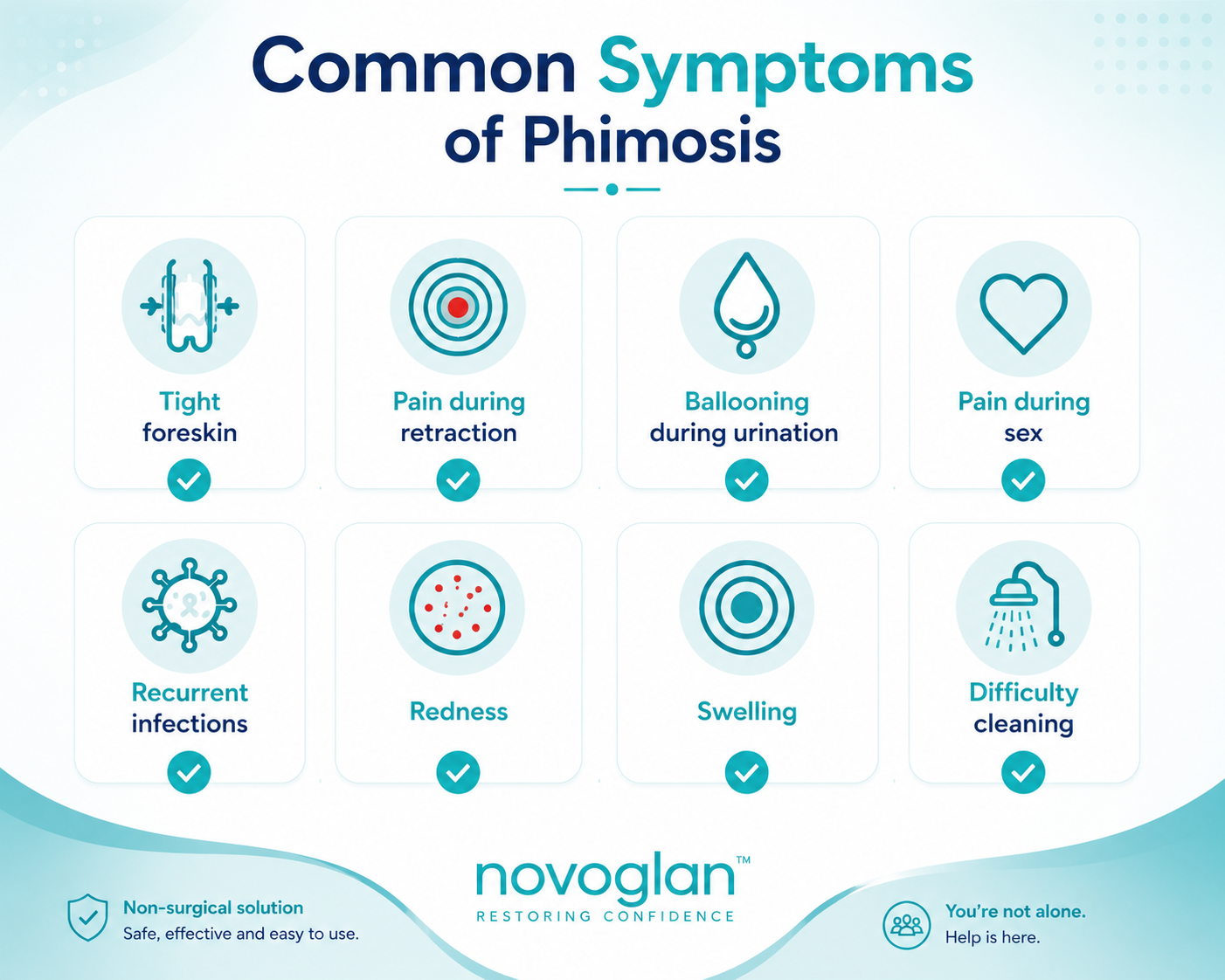
The signs and symptoms of phimosis vary depending on severity. The primary symptom is the inability to retract the foreskin over the glans. However, many men experience additional symptoms:
Common Symptoms
- Difficulty retracting the foreskin the most obvious sign
- Pain or discomfort during retraction, erection, or sexual activity
- Redness, swelling, or inflammation of the foreskin or glans
- Cracking or bleeding at the tip of the foreskin
- Ballooning of the foreskin during urination (urine gets trapped, causing the foreskin to bulge)
- Weak urine flow or pain when peeing
- Recurrent infections (balanitis or UTIs) due to inability to clean under the foreskin
- Thick discharge or unpleasant smell: signs of infection under the foreskin
When Phimosis Becomes a Problem
Phimosis is not always a problem. In children, it is usually normal and harmless. However, you should seek medical advice if you or your child experiences the following:
- Swelling and tenderness
- Pain when urinating or a weak stream of urine
- Blood in the urine
- Frequent urinary tract infections
- Bleeding or discharge from under the foreskin
- Painful erections that interfere with sex
Red Flags: When to Seek Emergency Care
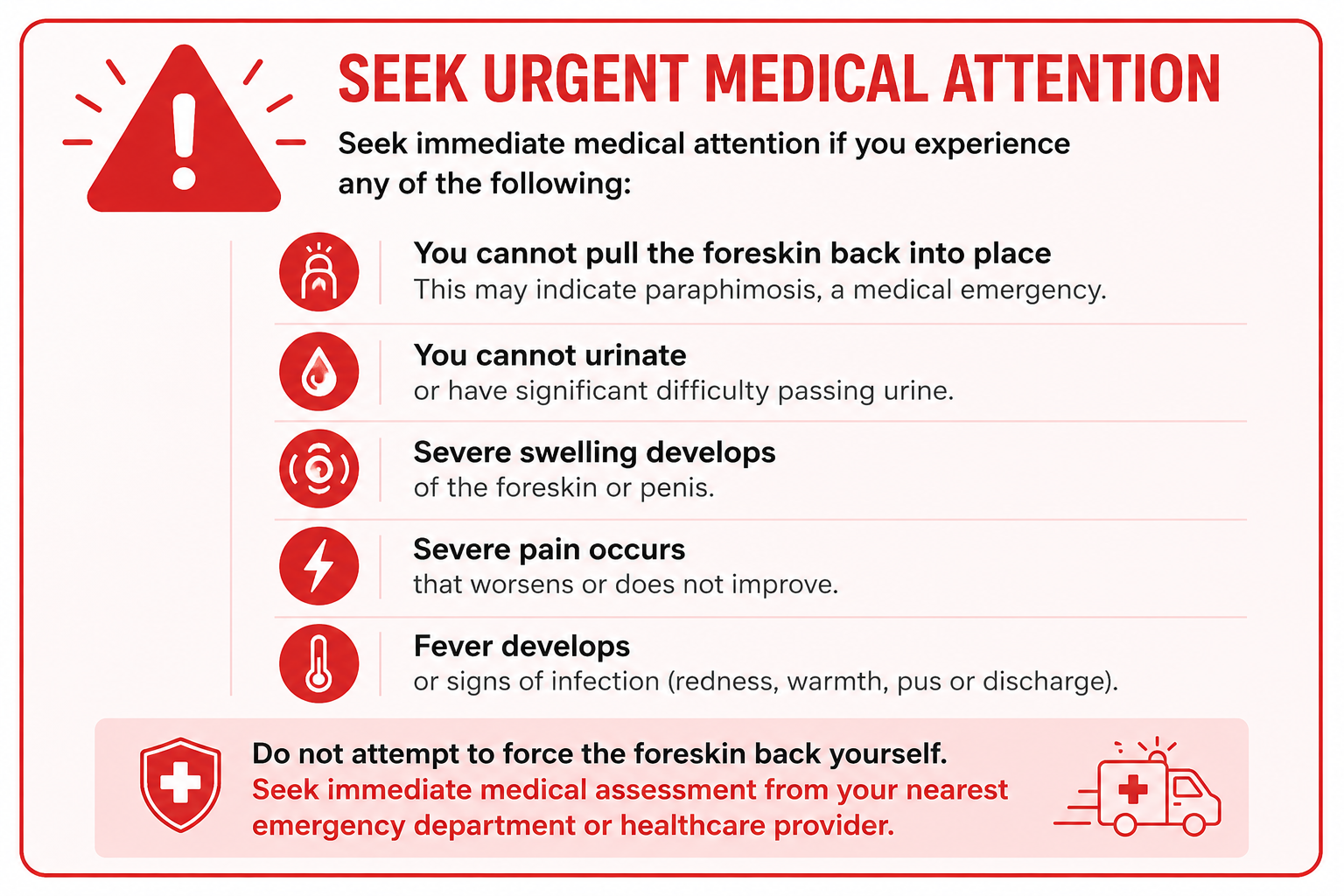
Paraphimosis is a medical emergency that occurs when the retracted foreskin becomes trapped behind the glans and cannot be returned. Symptoms include extreme swelling, severe pain, and discolouration (blue or dark red) of the glans. Immediate treatment is required to prevent tissue damage.
What Causes Phimosis in Adults?
Phimosis in adults is most often pathological, meaning it develops due to an underlying cause rather than being present from birth.
Common Causes of Pathological Phimosis
- Recurrent infections, balanitis (inflammation of the glans) or balanoposthitis (inflammation of both glans and foreskin) can lead to scarring and tightening.
- Lichen sclerosus (BXO), a chronic skin condition that causes white, scarred, inelastic skin. This condition is a leading cause of pathological phimosis in adults.
- Trauma or injury-forced retraction of the foreskin (especially in childhood) can cause tearing and subsequent scarring.
- Diabetes mellitus (high blood sugar) increases the risk of yeast infections and poor skin healing, both of which can contribute to phimosis.
- Poor hygiene: While not a direct cause, poor hygiene can lead to recurrent infections that trigger scarring.
- Skin conditions such as eczema, psoriasis, and other inflammatory skin disorders can affect the foreskin.
Is Phimosis Common in Adults?
Physiological phimosis is relatively rare in adult men. By age 17, only about 1 in 100 males still have phimosis. Therefore, phimosis in adults is most likely pathological in nature.
Who is at higher risk to develop phimosis?
Phimosis can affect males of all ages, but certain factors make it more likely to develop or persist into adolescence and adulthood. While some cases are present from childhood, others develop later in life as a result of inflammation, scarring, or underlying medical conditions.
You may be at a higher risk of developing phimosis if you:
Have Recurrent Balanitis
Repeated episodes of balanitis (inflammation of the head of the penis) can cause irritation and scarring of the foreskin over time. This scarring may gradually reduce the elasticity of the foreskin, making it more difficult to retract.
Have Diabetes
Men living with diabetes, particularly if blood glucose levels are not well controlled, are at an increased risk of developing phimosis. Higher glucose levels can encourage recurrent fungal infections and inflammation, both of which may contribute to foreskin tightening.
Have Lichen Sclerosus (BXO)
Lichen sclerosus, also known as Balanitis Xerotica Obliterans (BXO) when it affects the penis, is a chronic inflammatory skin condition that can lead to significant scarring and tightening of the foreskin. It is one of the more common causes of pathological phimosis in adults and should be assessed by a healthcare professional.
Experience Repeated Foreskin Trauma
Repeated tearing of the foreskin, forcefully retracting a tight foreskin, or frequent irritation during sexual activity may lead to scar tissue forming. Scar tissue is less flexible than healthy skin and can contribute to persistent tightness.
Have a Weakened Immune System
People with conditions or medications that affect the immune system may be more susceptible to recurrent infections, increasing the likelihood of inflammation and secondary phimosis.
Have Poor Foreskin Hygiene
Infrequent cleaning beneath a retractable foreskin can allow moisture, bacteria, yeast and smegma to accumulate, increasing the risk of irritation and infections that may contribute to phimosis. At the same time, excessive washing or using harsh soaps can also irritate the delicate skin of the foreskin.
Are an Older Adult
Although phimosis can occur at any age, acquired phimosis becomes more common in adulthood as a result of chronic inflammation, repeated infections, diabetes or skin conditions that affect the foreskin.
Can Phimosis Be Prevented?
Not every case of phimosis can be prevented, particularly when it is related to natural development or certain skin conditions. However, maintaining good foreskin hygiene, treating infections promptly, managing diabetes effectively, and avoiding forceful retraction may help reduce the risk of acquired phimosis.
If you experience persistent tightness, pain, recurrent infections or difficulty retracting the foreskin, early assessment and treatment may help prevent the condition from worsening.
How Is Phimosis Diagnosed?
Diagnosis is straightforward. A doctor (usually a urologist or general practitioner) can diagnose phimosis during a physical examination.
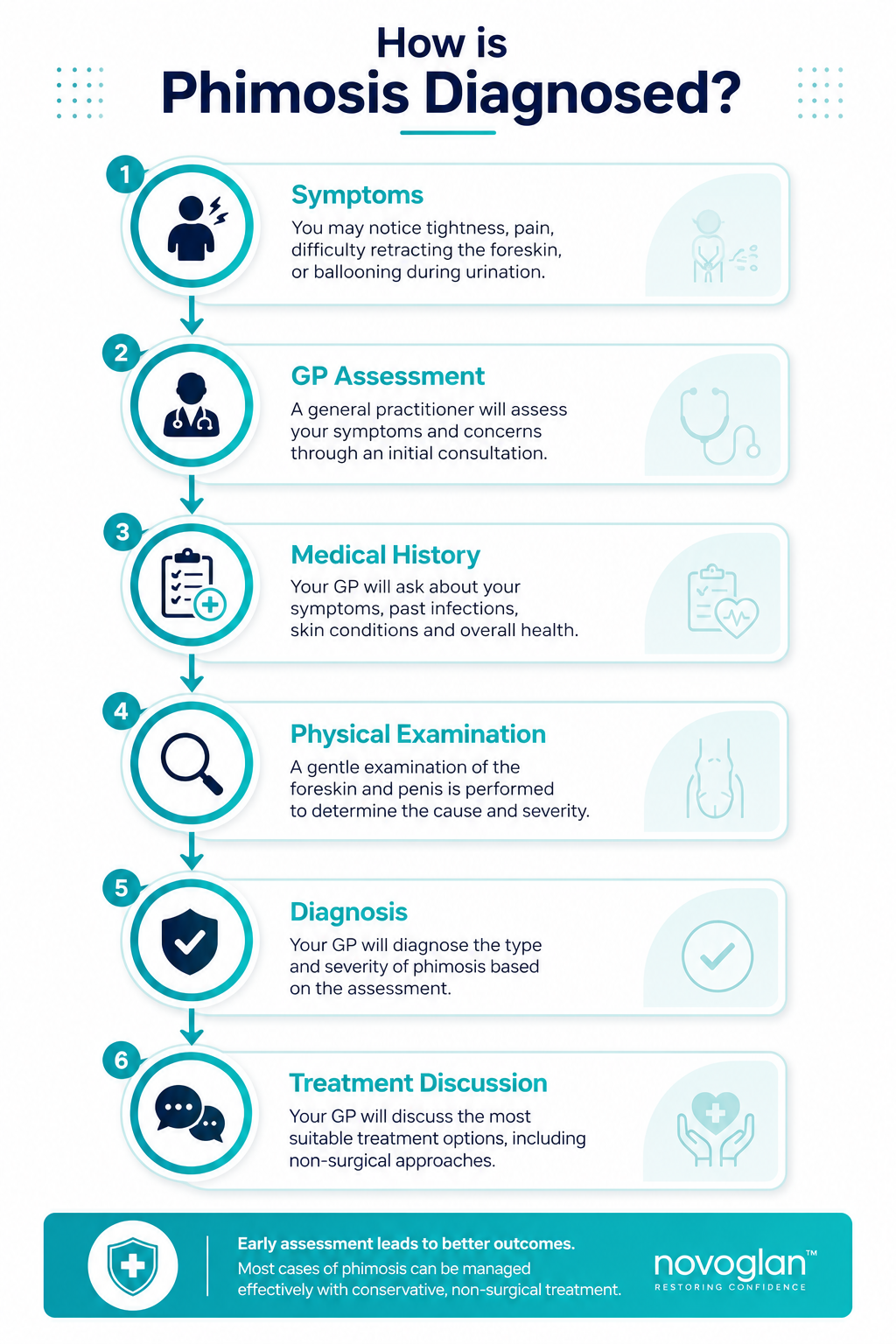
During the exam, the doctor will:
- Assess your ability to retract the foreskin
- Look for signs of scarring, inflammation, or infection
- Check for any underlying skin conditions (e.g., lichen sclerosus)
- Discuss your symptoms, medical history, and any difficulties with hygiene or sexual activity
In most cases, no additional tests are needed. However, if an infection is suspected, your doctor may order urine tests or swabs.
Treatment Options for Phimosis
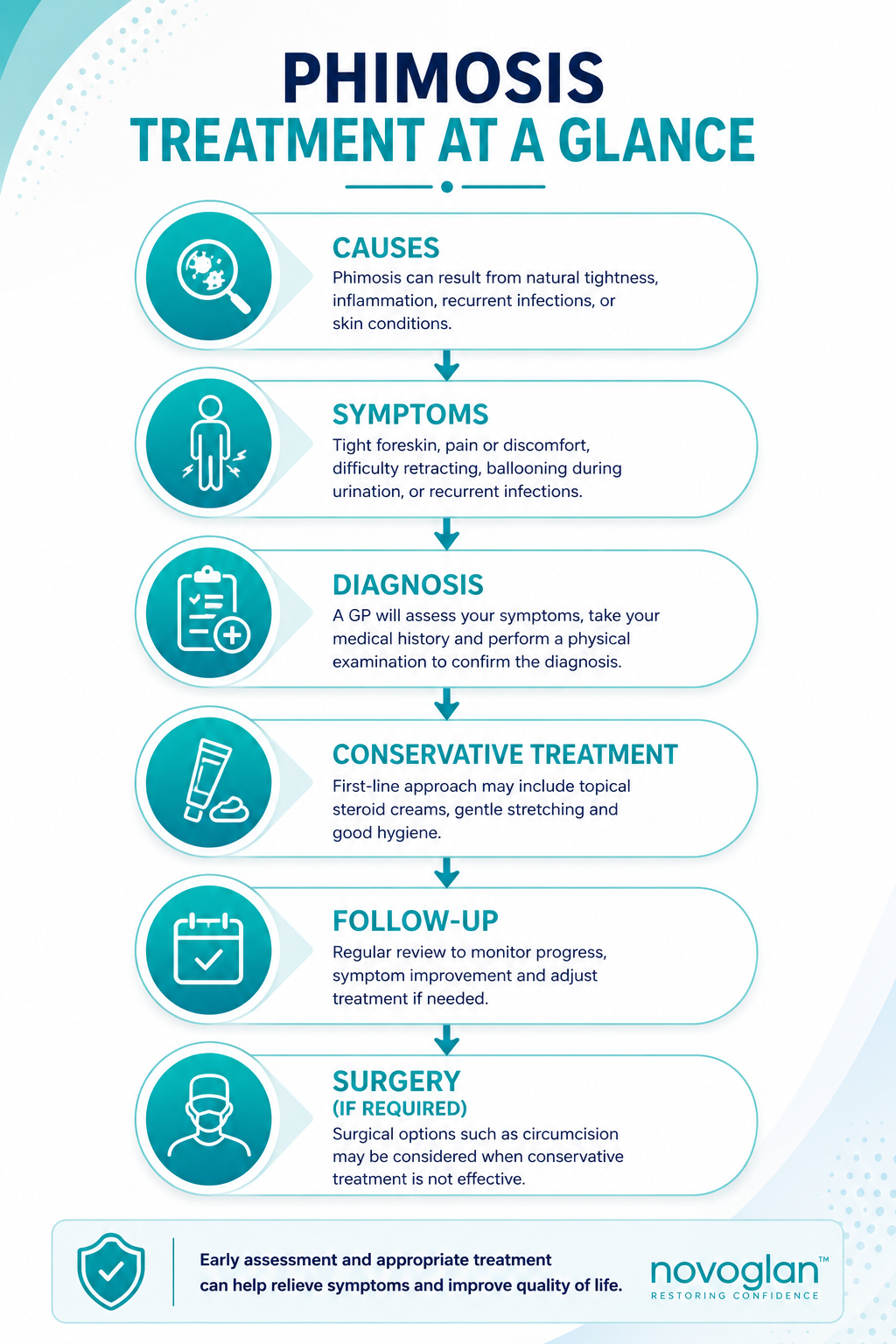
If you have phimosis but no symptoms, treatment may not be necessary. However, if phimosis is causing pain, hygiene problems, or interfering with sexual function, treatment should be considered.
The treatment options may include:
A. Steroid Creams
B. Foreskin Stretching Devices
C. Circumcision
How to Treat Phimosis Naturally?
Novoglan offers a breakthrough approach for men who are seeking an effective, evidence-based, non-surgical solution that can be used privately at home. Novoglan is a Class I medical device designed for gentle, controlled foreskin expansion through topical mechanical action. It uses custom‑moulded balloons that apply steady, even pressure to the tight foreskin ring, following the well‑established principle of tissue expansion. Because Novoglan is a Class I medical device, you can access it directly through our online platforms without a prescription, allowing you to begin treatment discreetly and on your own terms.
Many men diagnosed with phimosis immediately wonder whether they need surgery or if there is a way to treat the condition naturally. The encouraging news is that many cases of mild to moderate phimosis can be managed without circumcision, particularly when treatment begins early and there is no significant scarring.
Natural or conservative treatment focuses on gradually improving the flexibility of the foreskin while preserving it. Rather than forcing the foreskin back, these approaches work with the body's natural ability to adapt to gentle, consistent stretching over time.
Can Phimosis Be Treated Without Surgery?
For many men, yes. Healthcare professionals often recommend conservative treatment before considering surgery, particularly if the phimosis is uncomplicated and not caused by severe scarring or conditions such as lichen sclerosus (BXO).
Treatment options may include:
- Gentle foreskin stretching
- Balloon-assisted stretching using a purpose-designed medical device
- Prescription topical corticosteroid creams (where appropriate)
- Improving foreskin hygiene and treating any underlying infections
The most suitable approach depends on the underlying cause and severity of the phimosis, so it is important to seek medical advice if you are unsure.
Gentle Foreskin Stretching
One of the most widely recommended non-surgical treatments for phimosis is gentle foreskin stretching.
Stretching works by applying light, controlled tension to the tight foreskin over time. This encourages the skin to gradually become more flexible through the body's natural tissue expansion process.
The goal is not to force the foreskin to retract immediately. Instead, consistent stretching allows the skin to adapt gradually, making retraction easier and more comfortable over time.
Patience and consistency are essential. Stretching too aggressively can cause small tears and scarring, potentially making the condition worse.
Balloon-Assisted Foreskin Stretching
Some men find it difficult to perform manual stretching consistently or evenly. In these situations, balloon-assisted stretching may provide an alternative approach.
Purpose-designed medical devices use an inflatable balloon to apply gentle, even pressure around the tight foreskin. This controlled stretching is intended to support gradual tissue expansion while reducing the uneven force that can occur with manual stretching alone.
The Novoglan non-surgical phimosis treatment is a class-1 medical device that can be accessed online without a doctor's prescription.
The Role of the Novoglan Treatment Kit
The Novoglan Treatment Kit is a medical device designed to support non-surgical foreskin stretching. It uses a patented inflatable balloon that is positioned between the glans and the inside of the foreskin. Once inflated, the balloon applies gentle, 360-degree pressure to the tight portion of the foreskin.
This controlled stretching is designed to encourage the skin's natural tissue expansion process, helping improve foreskin flexibility and retraction over time.
For many men looking for a phimosis treatment at home, Novoglan offers a structured approach that can be used according to the ‘Instructions for Use’. As with any conservative treatment, individual results may vary depending on the severity of the condition and how consistently the treatment is followed.
Topical Corticosteroid Creams
Healthcare professionals may prescribe a topical corticosteroid cream to help soften and improve the elasticity of the tight foreskin. These creams are often used alongside stretching exercises to improve treatment outcomes.
Topical corticosteroids should only be used under the guidance of a healthcare professional, as they are prescription medicines and may not be appropriate for everyone.
Good Foreskin Hygiene
Maintaining good genital hygiene is an important part of managing phimosis and reducing the risk of complications such as balanitis.
If your foreskin can be comfortably retracted, gently wash beneath it each day using warm water or a mild, fragrance-free cleanser. Dry the area thoroughly before replacing the foreskin.
If the foreskin cannot yet be retracted, do not force it. Cleaning should only be performed as far as the foreskin moves comfortably.
A Conservative Approach First
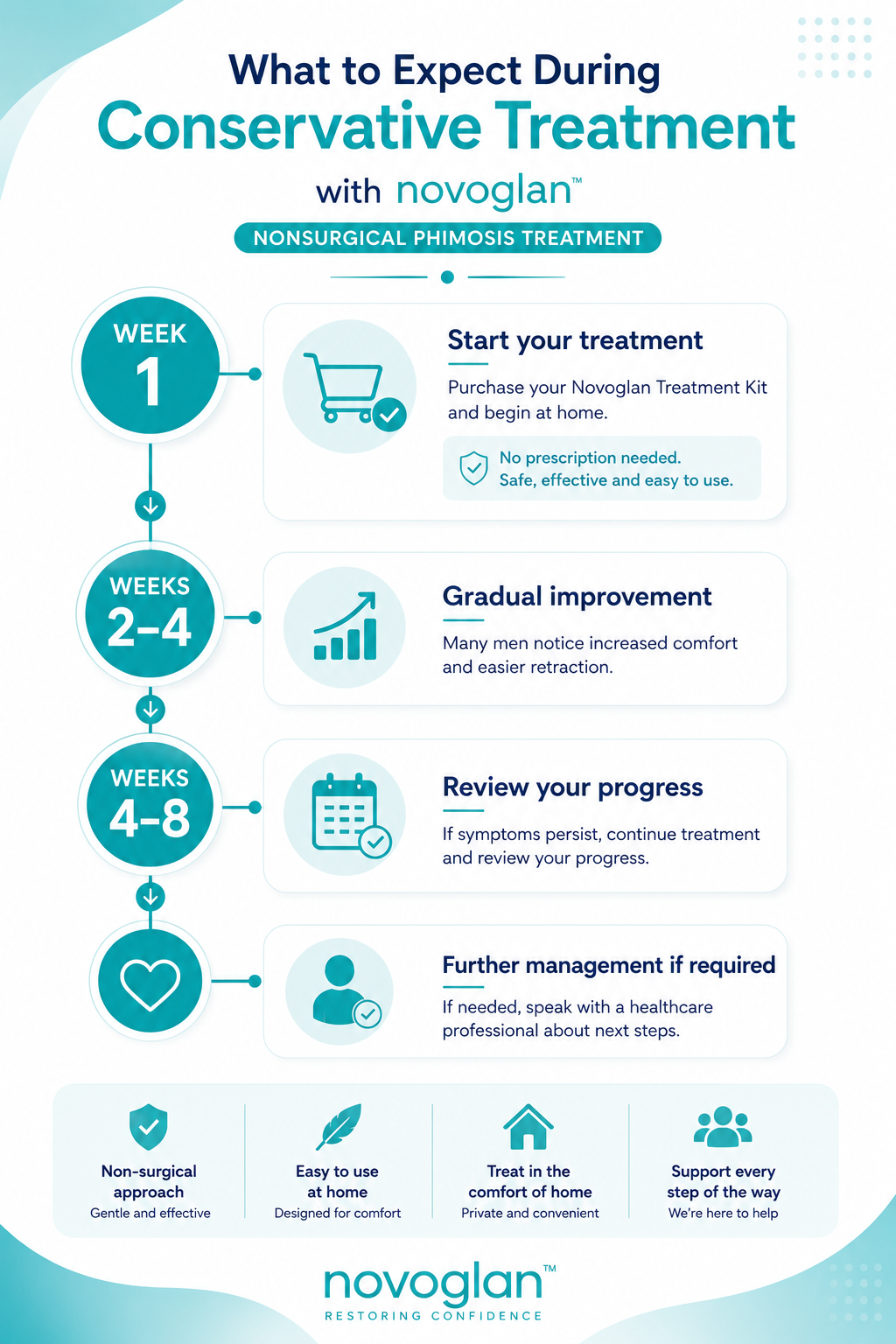
Treating phimosis naturally means taking a gradual, patient approach rather than seeking an immediate solution. Conservative treatment may help improve foreskin flexibility, preserve the foreskin, and reduce the need for surgery in appropriate cases.
The next section explains how foreskin stretching works, why consistency is important, and what you can realistically expect during treatment.
The Evidence Behind Novoglan
The Novoglan-01 clinical trial (published in Translational Andrology and Urology) enrolled 20 adult men with phimosis who used the device twice daily for 4–8 weeks. Results showed:
- 90% achieved improved foreskin retraction
- 100% achieved full foreskin retraction by study completion
- 95% reported reduced anxiety levels
- 95% were moderately to very satisfied with the treatment
- Zero adverse events were observed
At two‑year follow‑up, 95% of participants maintained full retraction with no recurrence and no need for surgical intervention. Real‑world data from 811 Novoglan users (post‑marketing surveillance) confirmed a 91% self‑reported success rate, with zero adverse events reported across over 55,000 treatments globally, a safety profile unmatched in the field.
Surgical Options (Circumcision)
Circumcision, the surgical removal of the foreskin, has traditionally been the definitive treatment for phimosis. While effective, it is permanent and irreversible and also carries risks, including bleeding, infection, loss of sensation, and psychological distress.
The good news: most men do not need surgery. With modern conservative options like Novoglan, many patients achieve complete resolution while preserving their foreskin.
Can Phimosis Be Prevented?
Not all cases of phimosis can be prevented. In young boys, a non-retractable foreskin is a normal part of development and usually resolves naturally over time. In adults, however, maintaining good foreskin health and treating underlying conditions early can sometimes help prevent acquired phimosis.
While prevention isn't always possible, the following habits may help reduce the risk of developing acquired phimosis or prevent existing tightness from worsening:
Practise Good Foreskin Hygiene
If your foreskin can be comfortably retracted, gently wash beneath it each day using warm water or a mild, fragrance-free cleanser. Dry the area thoroughly before replacing the foreskin to reduce excess moisture that can encourage irritation or infection.
Never Force the Foreskin Back
Forcefully retracting a tight foreskin can cause small tears and bleeding. As these injuries heal, scar tissue may develop, making the foreskin even tighter. Always allow the foreskin to move naturally and comfortably.
Treat Infections Promptly
Conditions such as balanitis can cause inflammation and, if left untreated or if they recur frequently, may contribute to scarring of the foreskin. Early treatment may help reduce the risk of long-term complications.
Manage Underlying Health Conditions
Keeping diabetes well controlled and seeking treatment for inflammatory skin conditions such as lichen sclerosus (BXO) may help reduce the likelihood of developing acquired phimosis.
Seek Advice Early
If you notice increasing tightness, pain, difficulty retracting the foreskin, or recurrent infections, seeking medical advice early may allow conservative treatment to begin before the condition progresses.
Can Phimosis Be Cured?
One of the most common questions men ask after being diagnosed with phimosis is whether it can be cured. The answer depends on the underlying cause, the severity of the condition, and the treatment used.
In clinical practice, healthcare professionals are more likely to talk about treating or resolving phimosis rather than curing it. This is because phimosis can develop for different reasons, including natural tightness, inflammation, scarring or skin conditions, and each may require a different approach.
For many men with mild to moderate phimosis, conservative treatment may successfully improve foreskin flexibility and restore comfortable foreskin retraction without surgery. More severe cases, particularly those involving significant scarring or conditions such as lichen sclerosus (BXO), may require surgical management.
The most appropriate treatment depends on your individual circumstances, which is why obtaining an accurate diagnosis is an important first step.
Does Phimosis Come Back After Treatment?
Whether phimosis returns depends on the underlying cause and how successfully it has been managed.
For many men, once comfortable foreskin retraction has been achieved and good foreskin hygiene is maintained, symptoms do not return. However, recurrence is possible if the underlying cause, such as recurrent balanitis, poorly controlled diabetes, or chronic inflammatory skin conditions, remains untreated.
Following your healthcare professional's advice, maintaining good genital hygiene, and addressing any underlying medical conditions may help reduce the risk of recurrence.
Frequently Asked Questions
Can phimosis come back?
It can. Whether phimosis returns after treatment depends on the underlying cause and how well that cause has been managed. For many men, once comfortable foreskin retraction has been achieved and good foreskin hygiene is maintained, symptoms do not return. However, recurrence is possible if factors such as recurrent balanitis, poorly controlled diabetes, repeated foreskin injuries, or inflammatory skin conditions like lichen sclerosus (BXO) continue to cause irritation or scarring. Following your healthcare professional's advice, maintaining good genital hygiene, and treating infections promptly may help reduce the risk of phimosis returning.
Is stretching a permanent solution?
For many men with mild to moderate phimosis, gentle foreskin stretching can provide long-lasting improvement by gradually increasing the flexibility of the foreskin. However, results vary depending on the underlying cause of the condition. If the tightness is caused by significant scarring or an underlying skin condition, stretching alone may not be sufficient. Consistency during treatment and maintaining good foreskin health afterwards may help preserve the improvement. If symptoms return or do not improve despite conservative treatment, it's important to seek medical advice to discuss other management options.
Will I always need circumcision?
No. Circumcision is not the only treatment for phimosis, and many men can be successfully managed without surgery. Conservative treatment options such as gentle foreskin stretching, prescription topical corticosteroid creams (where appropriate), and balloon-assisted stretching may help improve foreskin flexibility while preserving the foreskin. Circumcision is generally considered when conservative treatment has not been successful, when significant scarring is present, or when recurrent infections or other complications continue despite appropriate treatment. A healthcare professional can help determine which approach is most suitable for your individual circumstances.
Does phimosis get worse if left untreated?
It can. While mild phimosis may remain stable for some men, untreated phimosis can become progressively tighter over time, particularly if it leads to repeated inflammation, infections, or small tears in the foreskin. As these injuries heal, scar tissue may develop, reducing the skin's elasticity and making retraction more difficult. Untreated phimosis may also increase the risk of complications such as recurrent balanitis, pain during erections or sexual activity, difficulty maintaining good hygiene, and, in some cases, paraphimosis, which is a medical emergency. Seeking medical advice early may help prevent the condition from worsening and increase the likelihood that conservative treatment will be effective.
Can phimosis go away on its own?
In children, yes. A non-retractable foreskin is a normal part of development and usually becomes more mobile naturally as they grow. In adults, however, persistent phimosis is less likely to resolve without treatment and should be assessed if it causes symptoms such as pain, difficulty with hygiene or recurrent infections.
Can phimosis be treated without circumcision?
Yes. Many men with mild to moderate phimosis can be treated without surgery. Conservative treatment options may include gentle foreskin stretching, prescription topical corticosteroid creams (when appropriate), and balloon-assisted stretching using a purpose-designed medical device. Circumcision is generally considered when conservative treatments have been unsuccessful or when significant scarring is present.
Is phimosis painful?
Not always. Some men experience no discomfort and only notice that the foreskin doesn't retract fully. Others may develop pain during erections, sexual activity, urination, or while attempting to retract the foreskin. Pain, bleeding, or recurrent infections should be assessed by a healthcare professional.
How long does phimosis treatment take?
Treatment time varies depending on the severity of the tightness and the treatment method used. Some men notice improvement within 2 to 4 weeks, while achieving comfortable foreskin retraction often takes 6 to 8 weeks. Consistency is generally more important than speed.
Can stretching make phimosis worse?
Gentle stretching performed correctly is generally well tolerated. However, forcing the foreskin back or stretching too aggressively can cause small tears, bleeding and scarring, which may worsen the condition. Stretching should always be gentle, gradual and stopped if significant pain occurs.
Can phimosis cause balanitis?
Yes. A tight foreskin can make it more difficult to clean beneath the foreskin, allowing moisture, bacteria and yeast to accumulate. This may increase the risk of balanitis, an inflammation of the head of the penis. Recurrent balanitis may also contribute to scarring, creating a cycle in which each condition can worsen the other.
When should I see a doctor?
You should seek medical advice if:
- Your foreskin cannot be comfortably retracted by adulthood.
- You experience pain, bleeding or recurrent tearing.
- You develop repeated episodes of balanitis.
- Urination becomes difficult or the foreskin balloons during urination.
- You notice significant scarring, a tight white ring, or persistent swelling.
- The foreskin becomes trapped behind the glans (paraphimosis), which requires urgent medical attention.
Conclusion
Phimosis is a common condition that can affect men of all ages, but it does not always require surgery. For many men with mild to moderate phimosis, conservative treatments such as gentle foreskin stretching, prescription topical corticosteroids and balloon-assisted stretching may help improve foreskin flexibility while preserving the natural foreskin.
The key to successful treatment is understanding the underlying cause, choosing the most appropriate management approach, and seeking medical advice if symptoms are severe, recurrent or associated with significant scarring.
If you are experiencing a tight foreskin, remember that you are not alone. Early assessment and appropriate treatment can often improve comfort, support healthy foreskin function and help reduce the risk of future complications.
Ready to explore non-surgical treatment options? Learn how the Novoglan Treatment Kit supports gentle, controlled foreskin stretching and may help suitable men improve foreskin retraction from the comfort of home. Always read the Instructions for Use and speak with your healthcare professional if you're unsure which treatment is right for you.
References
- European Association of Urology. EAU Guidelines on Penile Disorders. European Association of Urology. Available at: https://uroweb.org/guidelines
- NHS. Phimosis. National Health Service (UK). Available at: https://www.nhs.uk/conditions/phimosis/
- Cleveland Clinic. Phimosis: Causes, Symptoms, Diagnosis & Treatment. Available at: https://my.clevelandclinic.org
- Merck Manual Professional Edition. Phimosis and Paraphimosis. Available at: https://www.merckmanuals.com/professional
- Kuehhas FE, Miernik A, Weibl P, Schoenthaler M. Conservative treatment of adult phimosis using topical corticosteroids and stretching techniques. (Include the publication you referenced for conservative management if you've cited specific outcomes.)
- Shih PS, et al. Topical corticosteroids for treating phimosis. (Use the study supporting the reported success rates for topical steroid therapy.)
- Polikarpov D, Chung E, et al. Updated Outcomes from the NOVOGLAN-01 Clinical Trial: A Non-Surgical Treatment for Adult Phimosis. Journal of Urology. 2026.
- Polikarpov D, Chung E, et al. Novoglan Device for Non-Surgical Treatment of Phimosis – Updated Outcomes from the NOVOGLAN-01 Clinical Trial. Journal of Sexual Medicine. 2026.
- Chung E. The Use of Novoglan™ Device in Reducing Psychosexual Burden in Patients Suffering from Phimosis and Awaiting Circumcision in a Public Hospital. Journal of Sexual Medicine. 2026.
- Novoglan. Post-Market Surveillance Study (811 patients). (Use the published paper if available. If unpublished, I'd avoid listing it as a formal reference and instead describe it as "internal post-market surveillance data" within the article.)