 FREE & FAST SHIPPING for orders over
  USA (Americas):
  UK (Europe):
  AUSTRALIA (Asia)


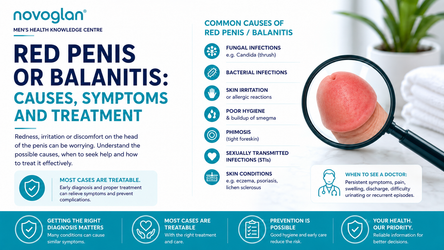
Red Penis (Balanitis): Causes, Symptoms, Treatment & When to See a Doctor
Posted by Kinza Khan, PharmD
14th Jul 2026
Red Penis (Balanitis): Causes, Symptoms, Treatment & When to See a Doctor
What is causing my penis to be red and inflamed?
Redness is most commonly caused by balanitis (inflammation of the glans). Other common causes include fungal or bacterial infections, skin allergies, irritation from soaps, and tight foreskin (phimosis).
Is balanitis easily treatable?
Yes. Most cases resolve quickly with proper hygiene, antifungal or antibiotic creams, and by addressing underlying triggers like hygiene habits or tight foreskin.
When should I see a doctor for penis redness?
You should consult a healthcare professional if the redness persists, causes severe discomfort, or is accompanied by swelling, discharge, pain during urination, or skin cracking.
Having Trouble Retracting Your Foreskin?
Recurrent balanitis is often linked to tight foreskin (phimosis). Treat the root cause safely and naturally at home without surgery.
Explore Non-Surgical Treatment Kits →100% Plain, Discreet Packaging & Fast Worldwide Shipping
What Is Balanitis?
Balanitis is inflammation of the head of the penis (glans). In uncircumcised men, the foreskin may also become inflamed, a condition known as balanoposthitis. Balanitis is relatively common and can affect males of any age, although it occurs more frequently in uncircumcised men and in those with underlying risk factors such as diabetes or a tight foreskin (phimosis).
The condition itself is not a disease, but rather a sign that the skin has become inflamed. This inflammation may be caused by fungal or bacterial infections, skin conditions such as eczema or psoriasis, allergic reactions, irritation from soaps or personal care products, poor hygiene, or friction. Identifying the underlying cause is important because treatment will vary depending on what is causing the inflammation.
Fortunately, most cases of balanitis respond well to appropriate treatment. Early assessment and management can help relieve symptoms quickly and reduce the risk of complications such as recurrent infections or foreskin scarring.
Is balanitis serious?
Most cases of balanitis are not serious and usually respond well to appropriate treatment. However, if left untreated, balanitis can become recurrent, cause increasing discomfort, lead to scarring of the foreskin, or contribute to the development or worsening of phimosis.
You should seek medical advice if your symptoms are severe, keep returning, do not improve with treatment, or are accompanied by fever, significant swelling, difficulty passing urine, or persistent pain.
Is balanitis contagious?
Balanitis itself is not contagious, but some of the conditions that cause it may be. For example, balanitis caused by a fungal infection such as Candida (thrush) may be passed between sexual partners, while sexually transmitted infections (STIs) can also cause symptoms similar to balanitis. Because many conditions share similar signs, it's important to obtain an accurate diagnosis rather than assuming the cause.
Can balanitis be treated without circumcision?
In many cases, yes. Most men with balanitis improve with conservative treatment, depending on the underlying cause. This may include improving foreskin hygiene, avoiding irritants, using prescription antifungal or antibiotic medications where appropriate, or treating associated skin conditions.
Effective, Non-Surgical Relief at Home
Overcome tight foreskin and inflammation safely. Discover proven, easy-to-use Novoglan treatment options shipped directly to your door.
Find Your Treatment Kit →100% Plain, Discreet Packaging & Fast Shipping Available
What Does a Red Penis Look Like?
A red penis caused by balanitis can look different from person to person depending on the underlying cause and the severity of the inflammation. In some men, the redness may be mild and limi